Skip to content
IndonesiaCharcoal

Industrial coconut charcoal

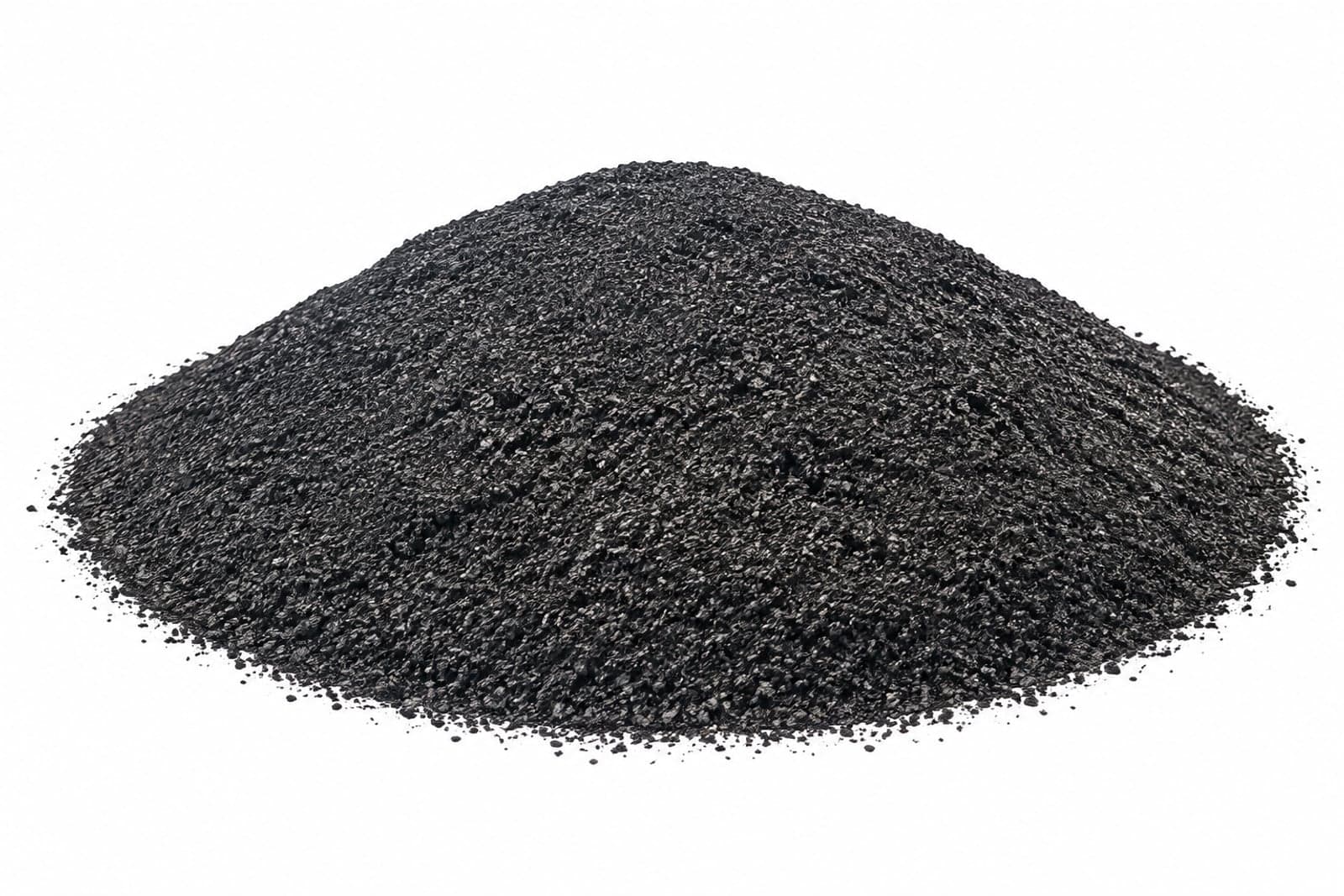
Granular coconut shell charcoal at 0 to 8 mm and 70% fixed carbon, sold as feedstock to briquette plants, activated carbon producers, and foundries.

An industrial buyer has no interest in how charcoal burns, only in what it does inside their own process. Carbon content, ash, moisture, and particle size determine whether a lot of coconut shell fines presses into a sound briquette, activates into a usable pore structure, or dissolves cleanly into a melt. Ours run 70% fixed carbon minimum at 0 to 8 mm, screened from the same cleaned shell stream as our consumer lines, and every lot ships with a sieve analysis.

Who buys coconut shell charcoal fines, and what for?

Nearly all of it goes to three groups. Briquette plants buy pre-carbonized input so they can press their own shapes without running a kiln. Activated carbon producers buy coconut shell for its hardness and pore structure and then steam-activate the granules. Foundries and steel mills buy it as a recarburizer additive. All three get the same lot documentation, and each usually wants a different particle size band.

Why coconut shell instead of wood charcoal for activated carbon?

Coconut shell carbon is harder and more microporous than wood charcoal, which is why activated carbon specifications for water, gold recovery, and gas-phase use name it as the precursor. The shell is cleaned before carbonization, so ash is capped at 5%, and because it is a byproduct of copra and desiccated coconut processing it carries no timber legality exposure.

Can you produce a custom particle size band?

The standard is 0 to 8 mm as screened. Tighter cuts such as 3 to 6 mm, or a milled fraction under 1 mm for briquette mixing, are made to order with a small yield surcharge. Put the target band and the tolerance your process needs in the RFQ, and we confirm it from a screened sample before production.

What documents come with each lot?

A sieve analysis with fixed carbon, ash, and moisture figures for each lot, together with the container certificate of analysis, the MSDS, and the non-self-heating test report carriers require under IMDG Class 4.2. When your plant wants an independent report before releasing the balance, third-party inspection by SGS or Sucofindo can be booked at cost.

How are fines packed, loaded, and priced?

Two options: 25 kg woven PP bags on pallets, or 1 t jumbo bags floor-loaded, either of which puts about 18 t into a 20 ft container. Moisture is held to 12% maximum with liners for safe stowage. Pricing is per ton FOB Jakarta or Semarang, with CIF on request, and steps down on quarterly volumes. The minimum order is one 20 ft container, and larger technical samples are available at a minimum charge.

Product FAQ

Ordering, testing, and shipping for this line.

What is the minimum order quantity?

One 20 ft container, loaded to about 18 t. A 40 ft holds about 26 t, and larger quantities earn a discount. We do not ship LCL or pallet lots, although a mixed-product container is fine for a trial.

Can I get samples before ordering?

Yes. Samples up to 1 kg are free, with the shipping on your account. Larger samples are charged at a minimum price. Ship collect on your own DHL or FedEx account, or ask us for a quote from our preferred courier.

What is the production lead time?

Typically 1 to 4 weeks from order confirmation to loading, depending on the quantity and the orders already in production. Peak season slots in Q3 and Q4 should be booked in advance.

What payment terms do you accept?

A 30% deposit on order and 70% against the shipping documents. On programme contracts we accept an irrevocable LC at sight. First orders are not shipped on open account.

How do I know the spec is genuine?

Each batch is tested in our own lab, and the container CoA quotes the batches that were loaded. On request we book SGS, Sucofindo, or Carsurin for pre-shipment inspection and factory audit at cost, and the MSDS and self-heating test report are issued before the vessel sails.

What packaging options exist?

Shisha lines go in 500 g, 1 kg, and 3 kg inner boxes packed into master cartons. BBQ lines go in 3 kg, 5 kg, 10 kg, and 20 kg bags. Lump and fines go in PP bags, kraft bags, and 1 t jumbo bags. Above the design minimums, any product can carry your branding.

Do you produce under private label?

Yes. Any product in the catalogue can carry your branding: your artwork on inner boxes, bags, and master cartons, printed to your dieline once proofs are approved. Mixed containers under one label are a routine way to launch a range.

Which Incoterms and ports do you work with?

FOB Jakarta (Tanjung Priok) or Semarang as standard, CIF or CFR to the major ports on request, and EXW for buyers running their own forwarders. The MSDS and the non-self-heating test report carriers require under IMDG Class 4.2 come with every booking.

Send us your spec. Quote back within 24 hours.

Give us the application, the monthly volume, and the destination port. You get price, lead time, and a sample plan in return.