Indonesian Coconut Charcoal IMDG and DG Shipping Guide
IMDG Class 4.2 rules for shipping coconut charcoal from Indonesia: UN 1361, the MSDS, the self-heating test report, packing choices, and who files the DG declaration.
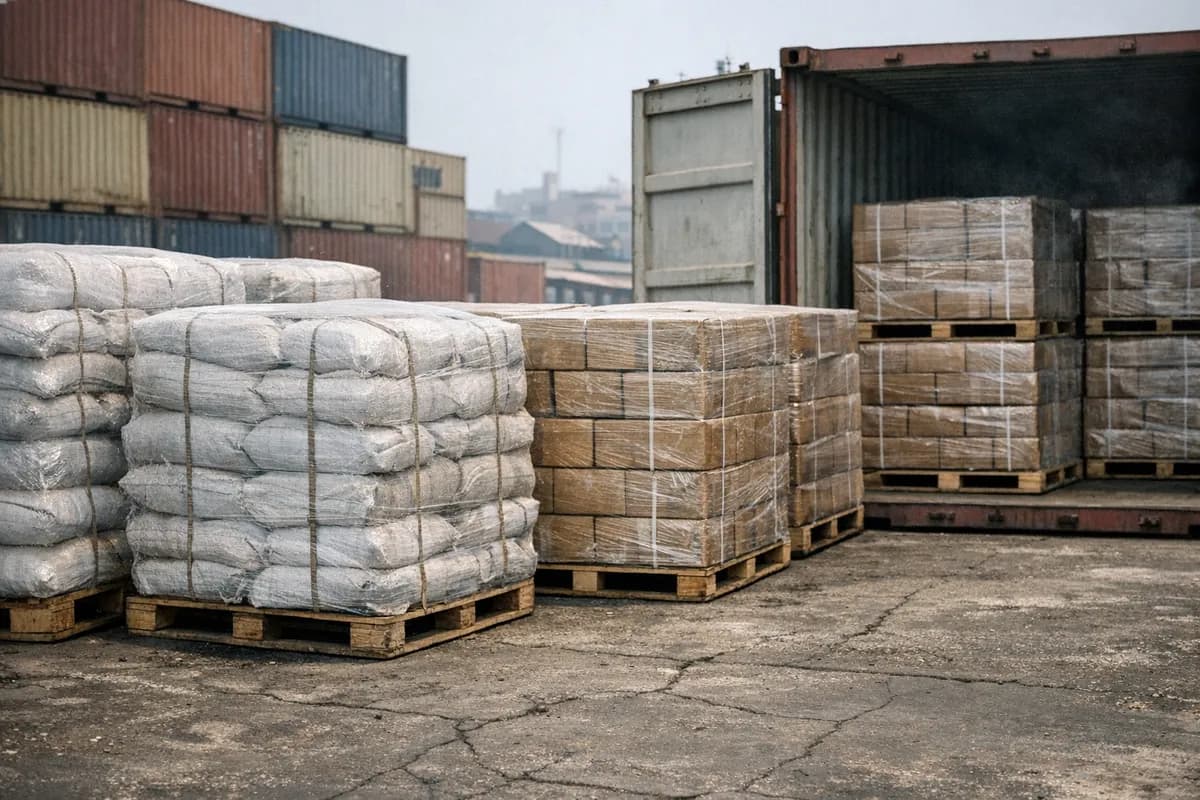
A coconut charcoal booking dies at the terminal for one of three reasons: the self-heating test report is missing, it has expired, or it was written for the wrong UN entry. Importers asking about IMDG dangerous goods rules for Indonesian coconut charcoal are really asking for two things, the document set and the order in which the booking happens. A general freight quote answers neither.
Under the International Maritime Dangerous Goods Code, carriers handle coconut shell charcoal as a Class 4.2 flammable solid. Before a container is presented for loading, our export desk has the MSDS, the non-self-heating test report, and the commercial file ready.
Why is coconut charcoal treated as dangerous goods in sea freight?
Given the wrong combination of moisture, packing density, and ventilation, coconut charcoal can heat itself. The International Maritime Organization publishes the IMDG Code to set out how carriers stow, document, and handle cargo that carries that risk.
What this means for an exporter is straightforward: booking the container as general cargo will not work. The forwarder needs product identification, an MSDS, and proof that the lot does not meet the self-heating criteria under whichever test method the carrier accepts.
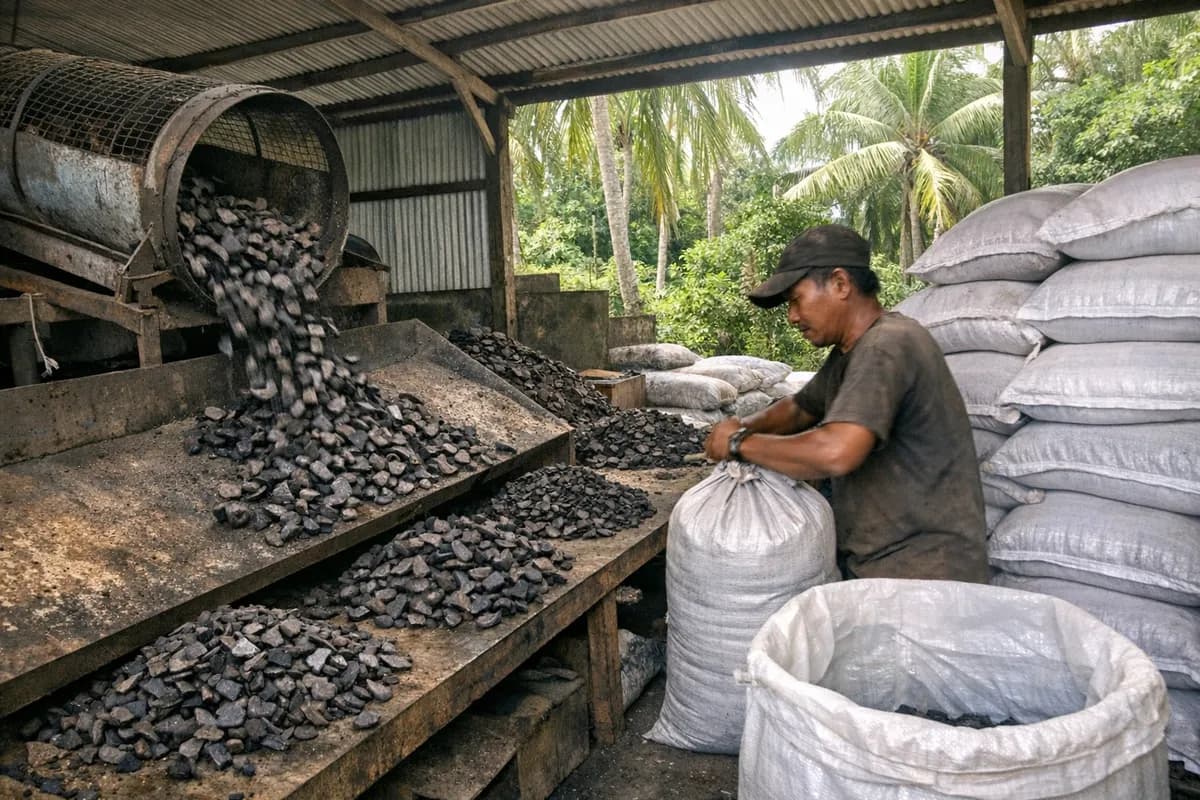
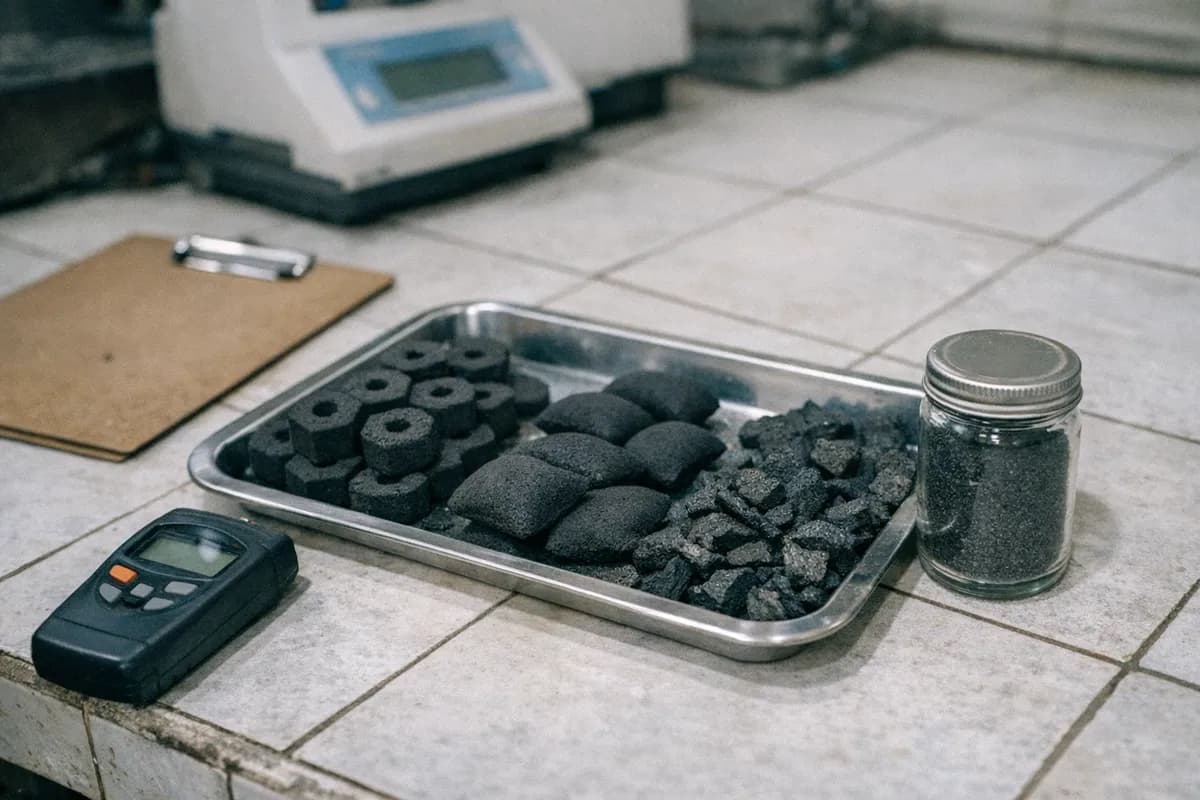
The rule covers pressed shisha cubes, hex briquettes, BBQ pillows, natural shell lump, and screened fines alike, so long as they ship as charcoal. Product form changes the packing and stowage discussion. It does not remove the documentation requirement.
Read about our export documentation service before you fix the shipment term, and check that the product form on the relevant product page matches the wording on the MSDS and the self-heating test report.
What is UN 1361 and when does it apply to coconut charcoal?
UN 1361 is the UN number tied to charcoal entries when coconut shell products come up in dangerous goods discussions. Your forwarder may also want the proper shipping name written exactly as it appears on the MSDS.
Invoice, packing list, MSDS, and booking instruction all have to use one product description. If one says coconut shell briquettes and another says barbecue charcoal, expect the carrier to hold the booking until the wording is reconciled.
On our coconut charcoal product facts, HS code 4402.90 is the trade classification. Customs classification and dangerous goods identification do different jobs. Keep both consistent, but never assume the HS code can stand in for the UN entry on the DG declaration.
Because the packing list must describe the form actually packed, buyers weighing lump against briquettes should look at our coconut shell range before issuing shipping instructions.
Which documents do carriers require before loading charcoal?
The usual carrier requirements are an MSDS, a non-self-heating test report, the commercial invoice, the packing list, and a dangerous goods declaration drawn up by the forwarder. On programme shipments, some lines also want a vanning certificate or a factory audit summary.
The MSDS should give the product identity, handling precautions, and the emergency notes relevant to charcoal. The self-heating test report should record the sample description, the test method, the result, the laboratory or inspection body, and the date of issue.
Our standard container file holds the commercial invoice, packing list, certificate of origin where requested, batch CoA, MSDS, and self-heating test report. Certificates specific to the destination are arranged once the RFQ names the port.
To have wording confirmed before production starts, send your carrier's document templates through our contact page at quotation stage.
How does the self-heating test differ from a batch CoA?
The self-heating test tells the carrier whether the cargo is acceptable for stowage under its IMDG rules. The batch CoA tells the buyer whether the chemistry meets the purchase specification.
A container can carry a strong CoA on fixed carbon and ash and still miss its sailing because the self-heating test report is absent or out of date. In the export file they are parallel requirements with separate owners.
The sample form named on the test report has to match the shipment: cube, hex, pillow briquette, lump, or fines. When a programme switches packing format, ask the carrier whether a fresh test is needed for the new form.
What packing choices affect IMDG acceptance for charcoal?
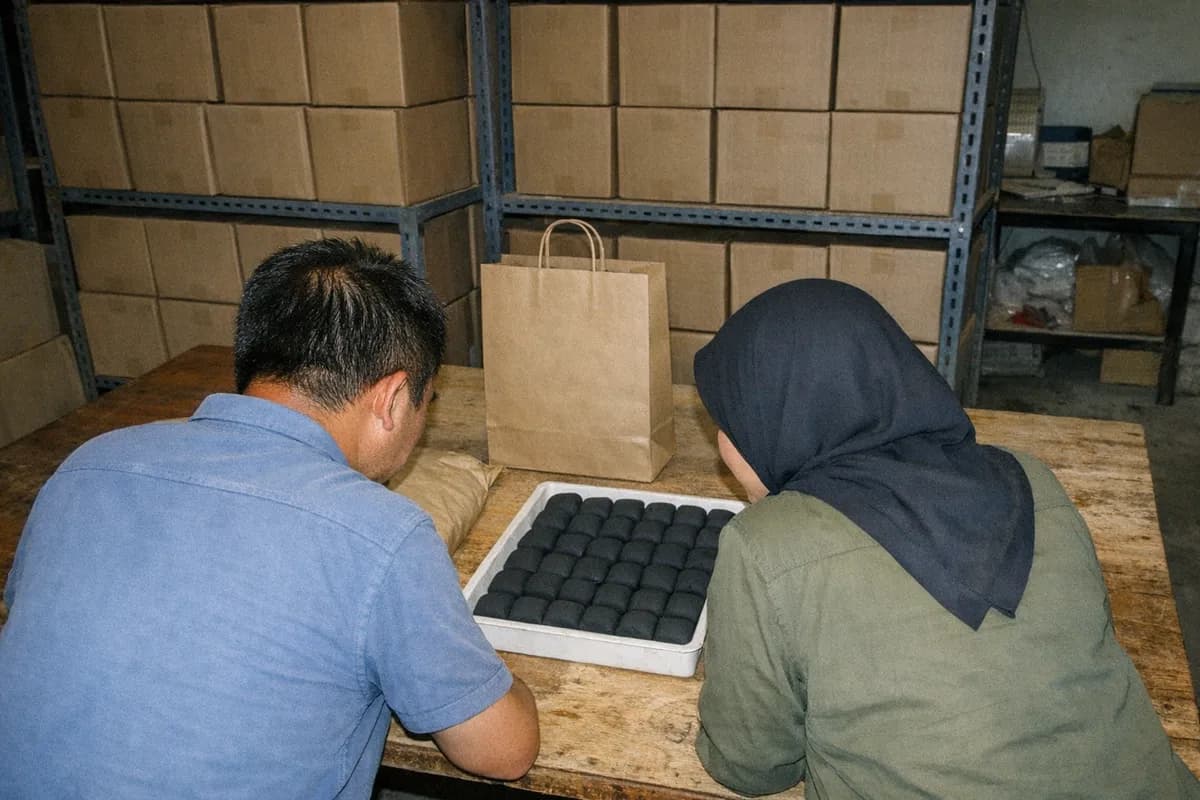
Packing influences ventilation, moisture risk, and how the carrier interprets the self-heating test sample. Shisha retail cartons, kraft BBQ bags, woven PP lump bags, and jumbo fines bags each need a packing list that corresponds to the tested form.
Moisture control applies to every format. Lump and fines ship with liners as standard. Shisha master cartons must be dry when stuffed, and any damaged bag should be pulled before loading.
Wet dunnage and odour-contaminated pallets have no place near charcoal, which is porous and picks up odour and moisture fast. Photographs of the container before sealing form part of a defensible shipping record.
The packing formats we quote most often for OEM and bulk programmes are listed on our services page.
Which Incoterms change who books the dangerous goods declaration?
Under FOB, once the goods reach the Indonesian port, ocean freight and most of the booking file pass to the buyer's forwarder. Under CIF, arranging freight moves to the supplier's side, though the DG declaration still depends on accurate product data from the exporter.
For most of our coconut charcoal products, the listed Incoterms are FOB, CIF, and EXW. Before the purchase order is signed, confirm the named port, whether freight is prepaid or collect, and who files the IMDG declaration.
A first-time importer usually learns fastest on FOB terms with a forwarder who already handles Class 4.2 charcoal. Programme buyers with established brokers can move to CIF once the freight quote and the document set are validated as a pair.
Building a compliance file for a new market? Begin with our Indonesian coconut charcoal export checklist, and put the MSDS and self-heating test dates on one renewal calendar.