Import Coconut Charcoal to Germany: Buyer Guide
What German importers need from an Indonesian coconut charcoal exporter: the customs file, HS code 4402.90 and TARIC, IMDG documents, pallet rules, and FOB versus CIF.
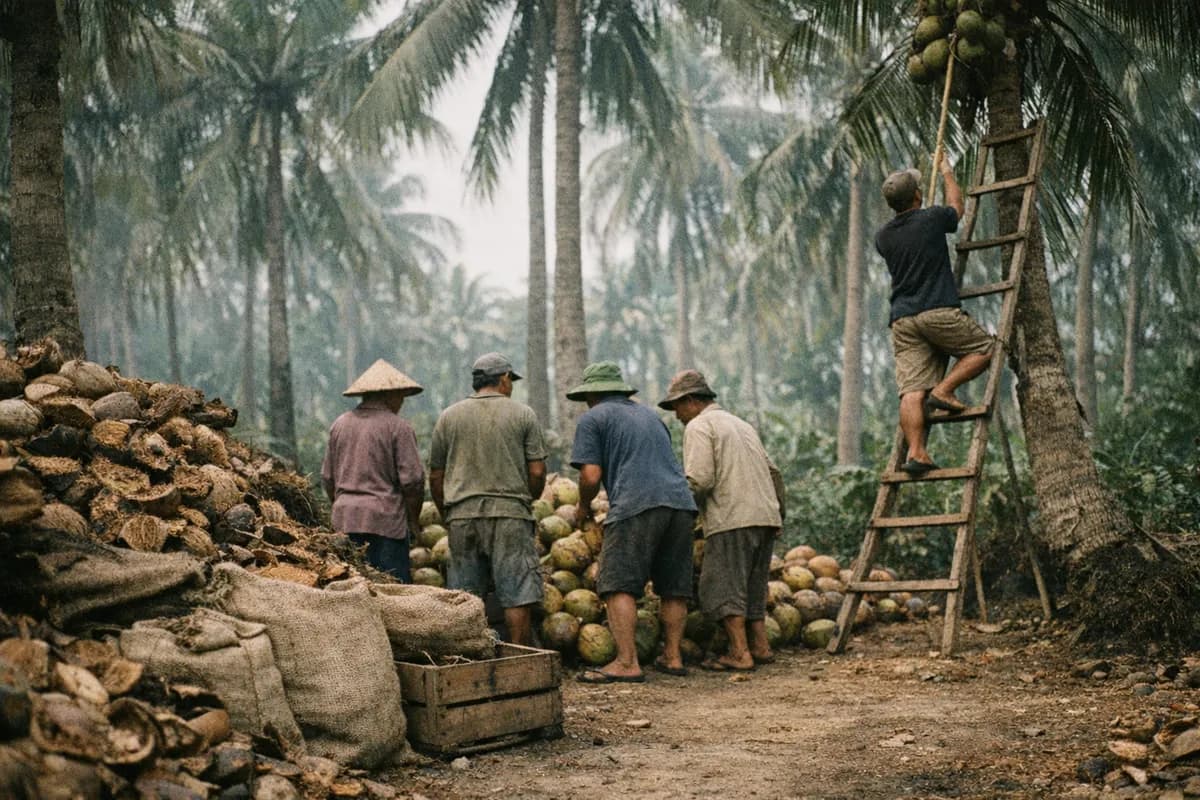
Three things have to be in order before a German importer's first container of Indonesian coconut charcoal sails: a clean commercial file, a product description that holds up under customs review, and carrier paperwork that meets IMDG Class 4.2 rules. The packing questions differ between the BBQ channel and the shisha channel. The export mechanics do not.
We ship to Germany on FOB, CIF, and EXW terms. Below are the steps EU buyers most often work through before the first booking is made.
What documents do German importers need from an Indonesian charcoal exporter?
The standard sea freight set is the commercial invoice, packing list, bill of lading, batch CoA, MSDS, and the self-heating test report. A certificate of origin is added when the buyer or the bank requires one.
German customs brokers expect the product to be named the same way on the invoice, the packing list, and the transport documents. Describe the goods as coconut shell charcoal and state the form explicitly, whether pressed or screened.
If payment runs through an LC or a documentary collection, check the document titles before the LC is opened. Our export documentation service sets out the file we assemble for every container.
How is coconut charcoal classified for EU customs from Indonesia?
Coconut shell charcoal products leave our factory under HS code 4402.90. Within the EU, TARIC may add digits to that code for national tariff and statistical reasons.
Confirming the final classification, and any duty payable on arrival, falls to the importer's broker. What the exporter controls is consistency: the six-digit HS code and the product description should not change between quotation and shipment.
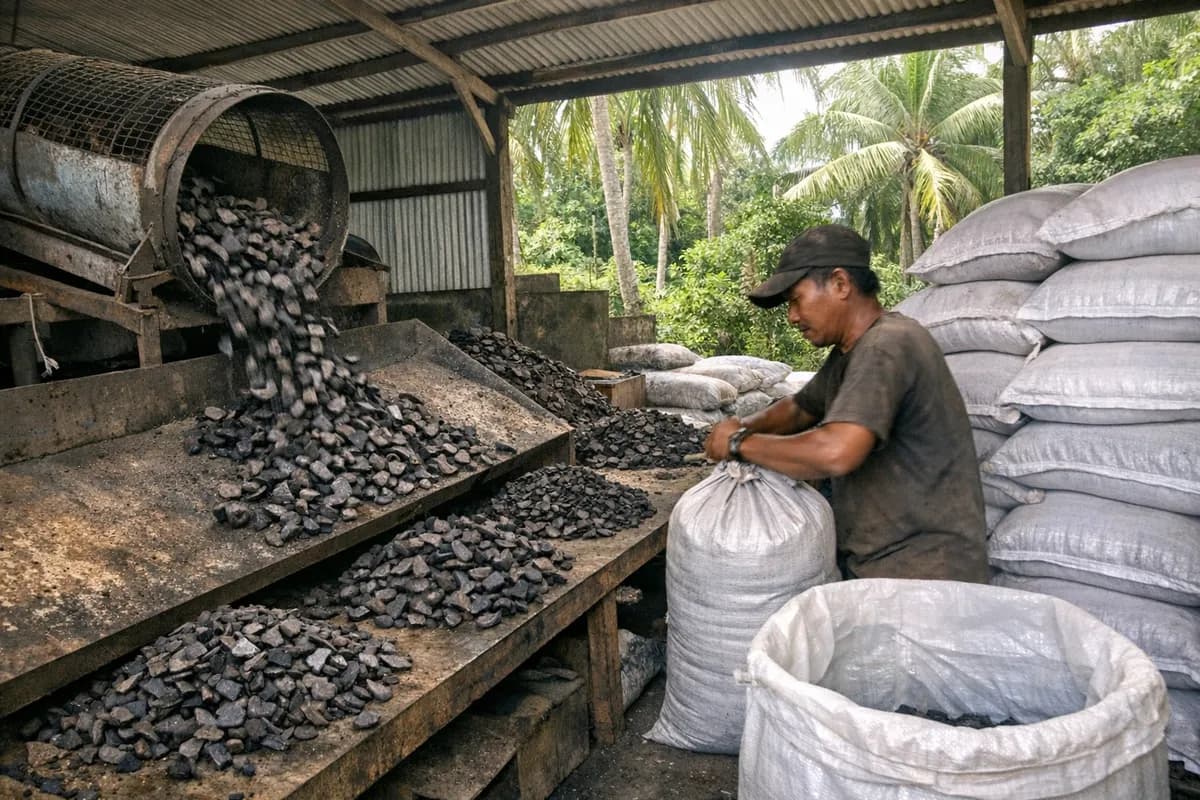
Retail vocabulary for shisha cubes, BBQ briquettes, lump, and fines varies, but the export description should always come back to coconut shell charcoal.
Have a look at our coconut shell range before you settle the product mix for a German programme.
Do German buyers need REACH documentation for coconut charcoal?
Coconut charcoal is a processed solid fuel, not a chemical product, yet compliance questions still come up while EU distributors onboard a new supplier. What your particular sales channel demands is something your legal team should confirm.
For every line we supply an MSDS, a batch CoA, and a product specification sheet. Where your file calls for a specific compliance statement, send us the template at quotation stage and we will tell you what the factory can support.
An MSDS is not a substitute for customs or carrier documents. Each file answers to a different control point along the import chain.
Which formats do German distributors import most often?
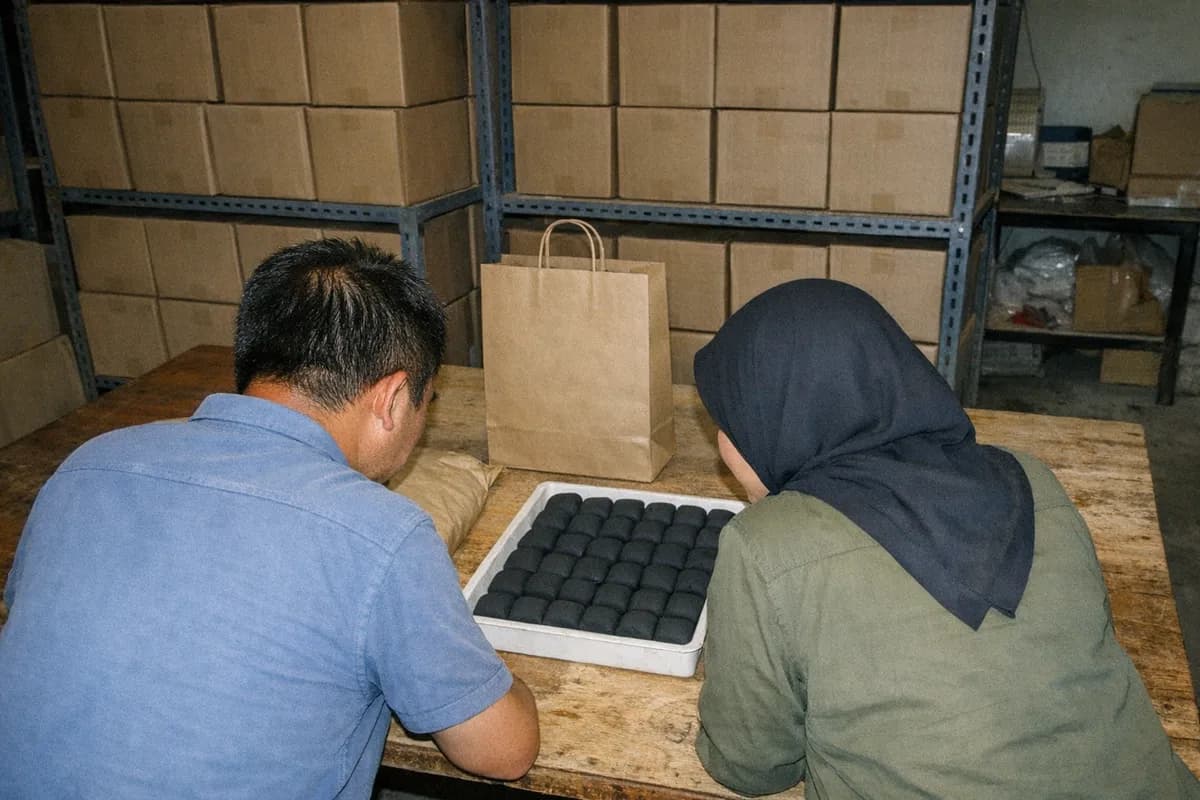
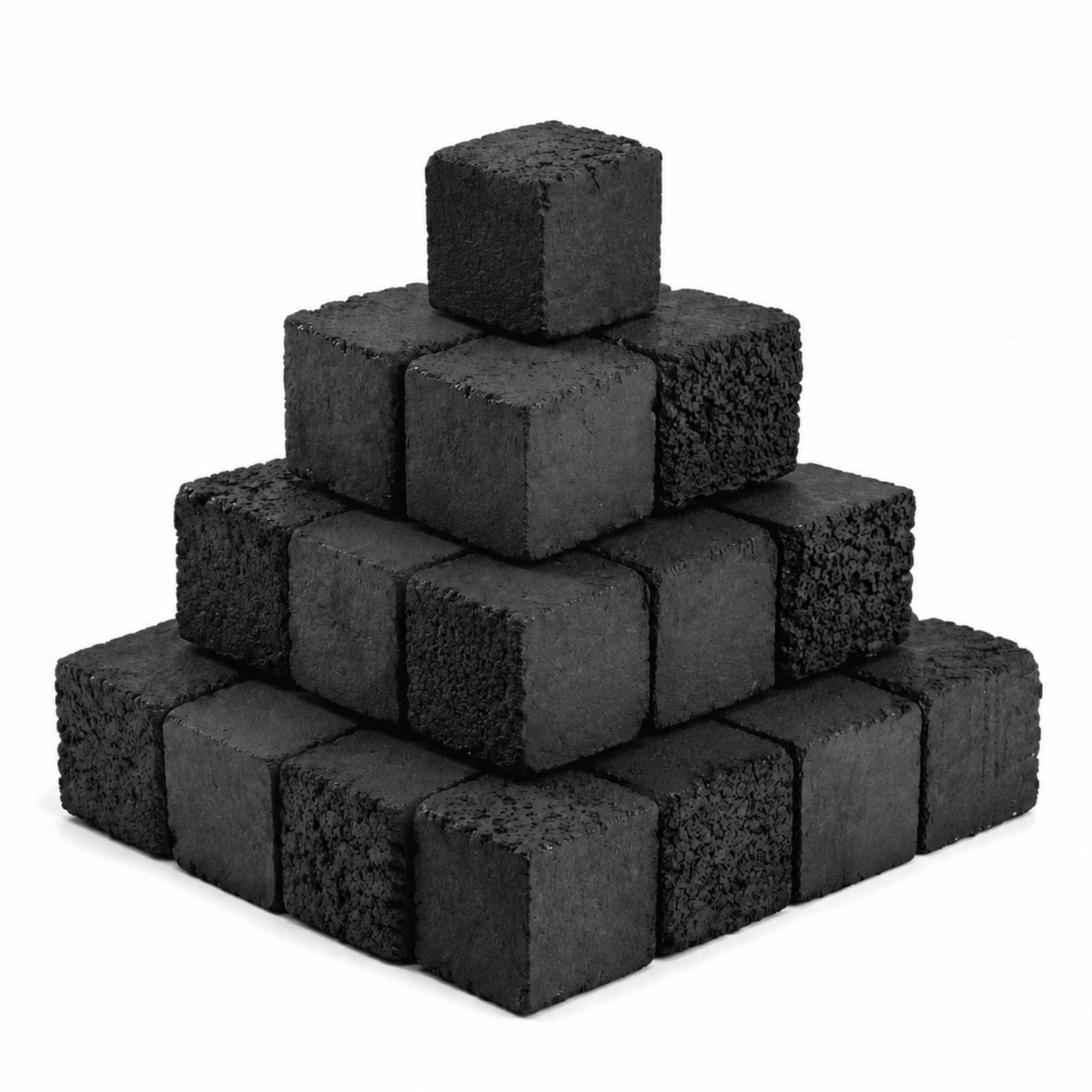
Hookah shops and EU retail brands buy coconut shisha cubes and hex briquettes. Grill and supermarket channels take coconut BBQ briquettes, either in kraft bags or in retail bags under their own label.
From the catalogue
Coconut Shisha Charcoal Cubes
Coconut shell cubes pressed in 22, 25, 26, and 27 mm: 80% fixed carbon, 1.9% white ash, and 80 to 125 minutes per load.
ISO 9001:2015 · MSDS · Self-heating test (IMO) · Factory audit on request
View productRestaurant groups sometimes add hardwood lump for charcoal ovens. Industrial buyers ask for coconut charcoal fines as feedstock.
Put the format mix and the packing type in the RFQ, so the German warehouse gets the handling instructions it is set up for.
What packing and pallet rules matter for German warehouse intake?
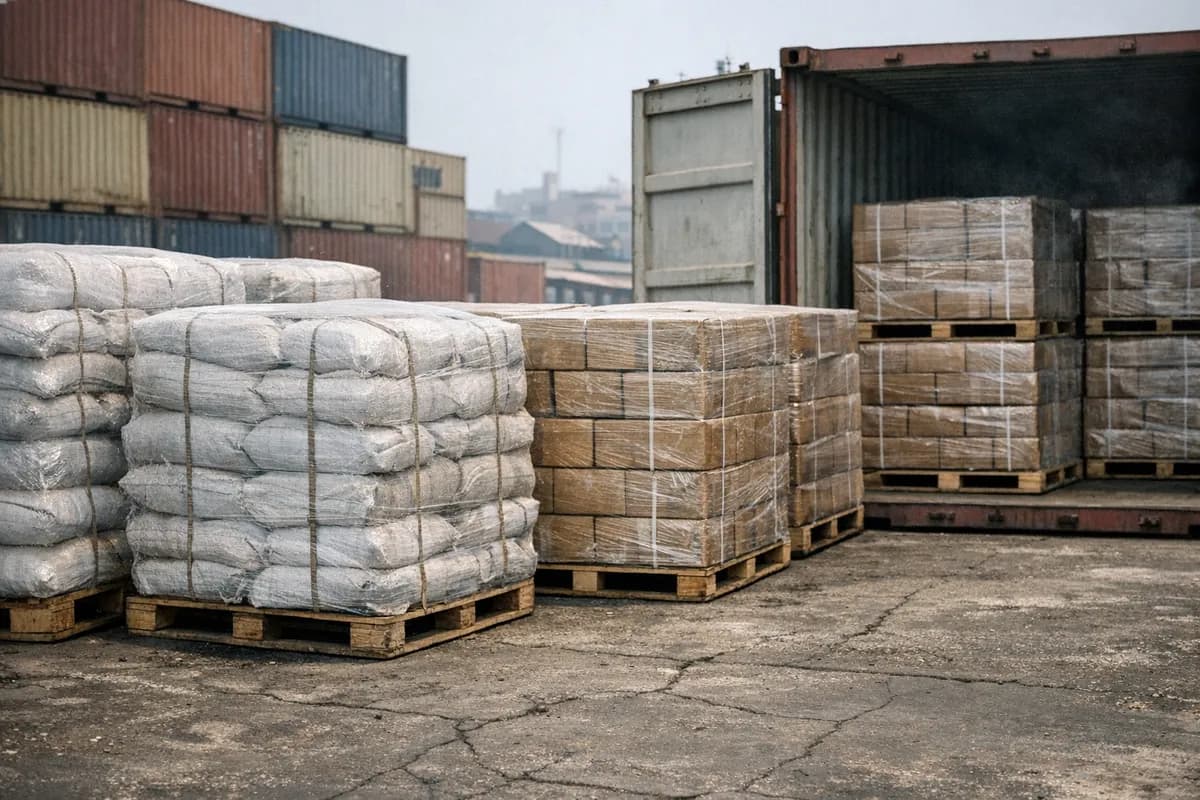
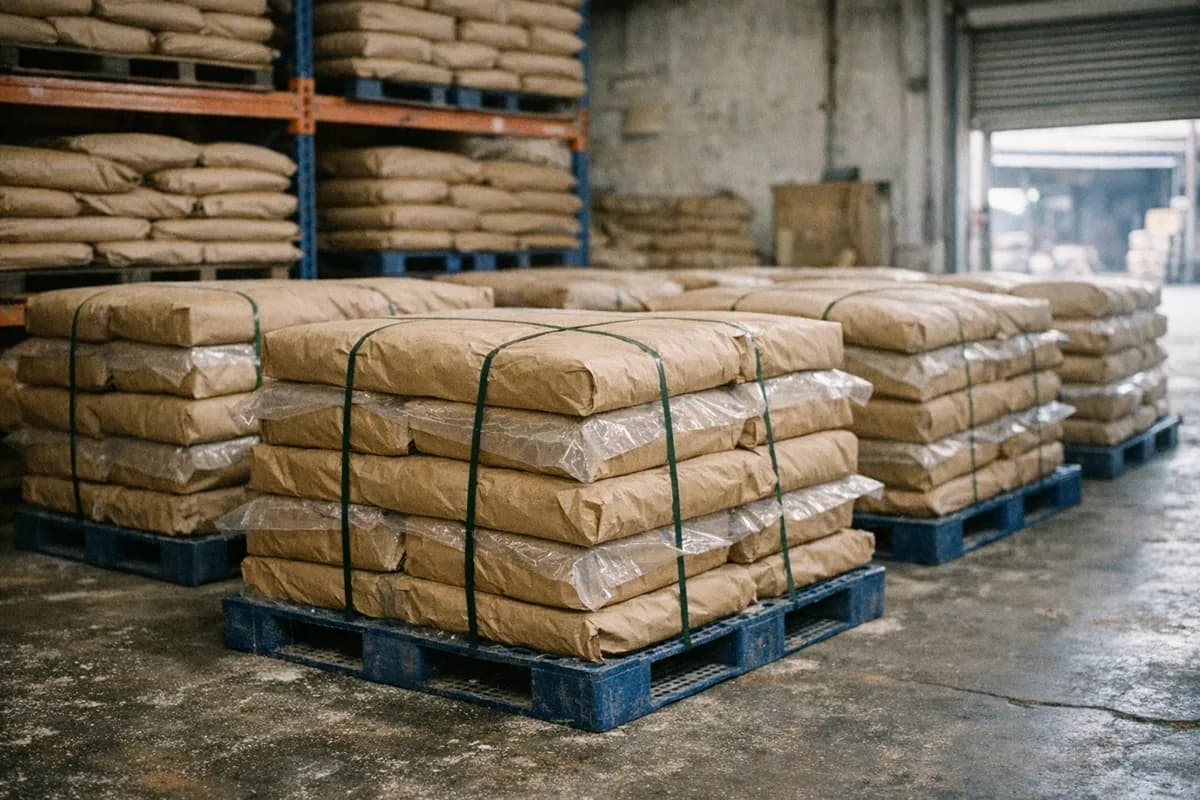
For retail shisha boxes, artwork and master-carton marks must be approved in advance, in English or German as agreed. For bulk kraft bags, the weight marks need to be clear and the pallets stable enough for racking.
Wooden pallets bring ISPM 15 marking rules into play, so confirm those with your broker. A lot of EU warehouses would rather receive inbound charcoal on plastic pallets or slip sheets.
Lump and fines always ship with moisture liners. A torn bag should be rejected at loading, not discovered as damage when the container is opened in Hamburg or Bremerhaven.
How should German buyers choose FOB versus CIF from Indonesia?
Buyers with an established EU forwarder, one who can handle the IMDG booking and schedule main carriage, tend to prefer FOB Jakarta or Semarang. Buyers who want the exporter to arrange ocean freight to the named German port choose CIF Hamburg or Bremerhaven.
Only compare quotes once the format mix, the packing type, and the document list are identical across suppliers. Freight rates move, so a CIF offer should name the carrier and carry a validity date.
For a Germany quotation, send volume, destination port, and compliance requirements through our contact page. Our export checklist is a useful companion when you build the first import file.