Indonesian Coconut Charcoal Export Checklist
A buyer's checklist for exporting coconut charcoal from Indonesia: documents, HS code 4402.90, fumigation questions, moisture-safe packing, Incoterms, and COA tests.
An importer asking how to export coconut charcoal from Indonesia is usually asking two questions at once. What has to appear on the supplier's documents? And what has to be checked before the goods go into a container?
As an export desk, we field both daily. With coconut shell charcoal the risk is seldom a single missing document. More often it is a mismatch somewhere between the purchase order, the HS code, the Certificate of Analysis, the packing format, the Incoterm, the shipping instruction, and the documents presented for payment.
What documents do I need to import coconut charcoal from Indonesia?
Agree the document set before the purchase order is placed, not once the container has been stuffed. The normal file begins with the commercial invoice, packing list, bill of lading, and Certificate of Analysis, plus any certificate the destination country or the payment method requires.
For coconut charcoal, the invoice and the packing list must repeat the same product description, HS code, packing unit, net weight, gross weight, carton or bag count, Incoterm, named port or place, and buyer details. Where one document reads coconut shell briquettes and another reads barbecue charcoal, the customs broker may hold release until the difference is explained.
Under a documentary collection on D/P terms, buyers generally ask us to align the shipping documents with the bank's instruction. A workable D/P set can include the commercial invoice, packing list, original bill of lading or sea waybill as agreed, Certificate of Analysis, certificate of origin if the buyer requests it, and an insurance document when the sale is CIF.
With an LC, wording carries more weight. Before the LC is opened, confirm that the product name, HS code, Incoterm, shipment window, partial shipment rule, transshipment rule, document originals, consignee, notify party, port names, and latest presentation date can all be met in practice. Should the LC call for a document that the supplier, carrier, chamber, lab, or Indonesian authority will not issue in that form, amend the LC before production starts.
On the buyer's side, the checklist should cover:
- Product name and form, for instance coconut shell cubes, coconut lump, or coconut charcoal fines.
- HS code, which is 4402.90 for our coconut charcoal products.
- A Certificate of Analysis carrying the same lot or shipment reference as the packing record.
- A packing list with the bag, carton, or jumbo bag count.
- A fumigation or phytosanitary document, but only where the destination rule, the buyer's broker, the carrier, or the packaging method calls for one.
- An insurance certificate whenever the agreed Incoterm is CIF.
- Any LC-specific wording checked against the pro forma invoice before the LC is issued.
If your broker works from a fixed import template, send it to us before quotation through our contact page. We can then check whether the requested document wording fits the product and the shipment term.
Which HS code covers Indonesian coconut shell charcoal?
The HS code shown in the product facts for our Indonesian coconut shell charcoal products is 4402.90. Heading 4402 of the World Customs Organization Harmonized System covers wood charcoal, shell or nut charcoal included, whether or not agglomerated.
Apply the code consistently across the pro forma invoice, the commercial invoice, the packing list where needed, the Certificate of Analysis reference, and the customs instruction. The final import classification remains with the importer and the customs broker at destination, since national tariff schedules can add digits beyond the six-digit HS level.
A product name is not a classification. Coconut shisha cubes, BBQ briquettes, natural coconut lump, and granular fines are described in different commercial terms, yet our product pages all show 4402.90 as the export HS code. When your customs broker asks for a material description, use coconut shell charcoal and say whether it is pressed, screened, granular, or packed for retail.
Buyers comparing product forms will find the coconut-based lines gathered on our coconut shell charcoal range page. Use it to choose the product, then confirm HS code and document wording in the quotation file.
Do coconut charcoals require fumigation or phytosanitary certificates?
There is no single fumigation or phytosanitary answer for coconut charcoal that holds at every destination. Ask the destination customs broker whether the requirement attaches to the charcoal itself, to the wooden pallet or dunnage, or to a country-specific import permit condition.
Most of the document disputes we encounter start with packaging rather than with the charcoal specification. Where wooden pallets, dunnage, or other wood packaging material are used, the buyer should check ISPM 15. That standard, published by the International Plant Protection Convention, applies to wood packaging material in international trade and requires approved treatment and marking.
Cargo shipped in cartons, woven PP bags, kraft bags, or jumbo bags without wooden pallets may face a different fumigation discussion. It cannot simply be ignored, though. Some importers still ask for a non-wood packing declaration, a fumigation certificate, or a phytosanitary certificate because their broker, the consignee's warehouse, or the local agriculture authority requires it.
The safe step before ordering is simple. Send your broker the exact packing plan: 1 kg inner boxes in master cartons, 10 kg kraft bags, 15 kg woven PP bags with moisture liner, 25 kg woven PP bags, or 1 t jumbo bags, and whether pallets are used. Then write the required certificate name into the purchase order and the payment document list.
Never wait until the vessel has sailed to ask about a phytosanitary certificate. If a document must be issued before shipment, a late request can force an amendment, a delay, or a payment discrepancy under the LC.
How should coconut charcoal be packed for sea freight to prevent moisture?
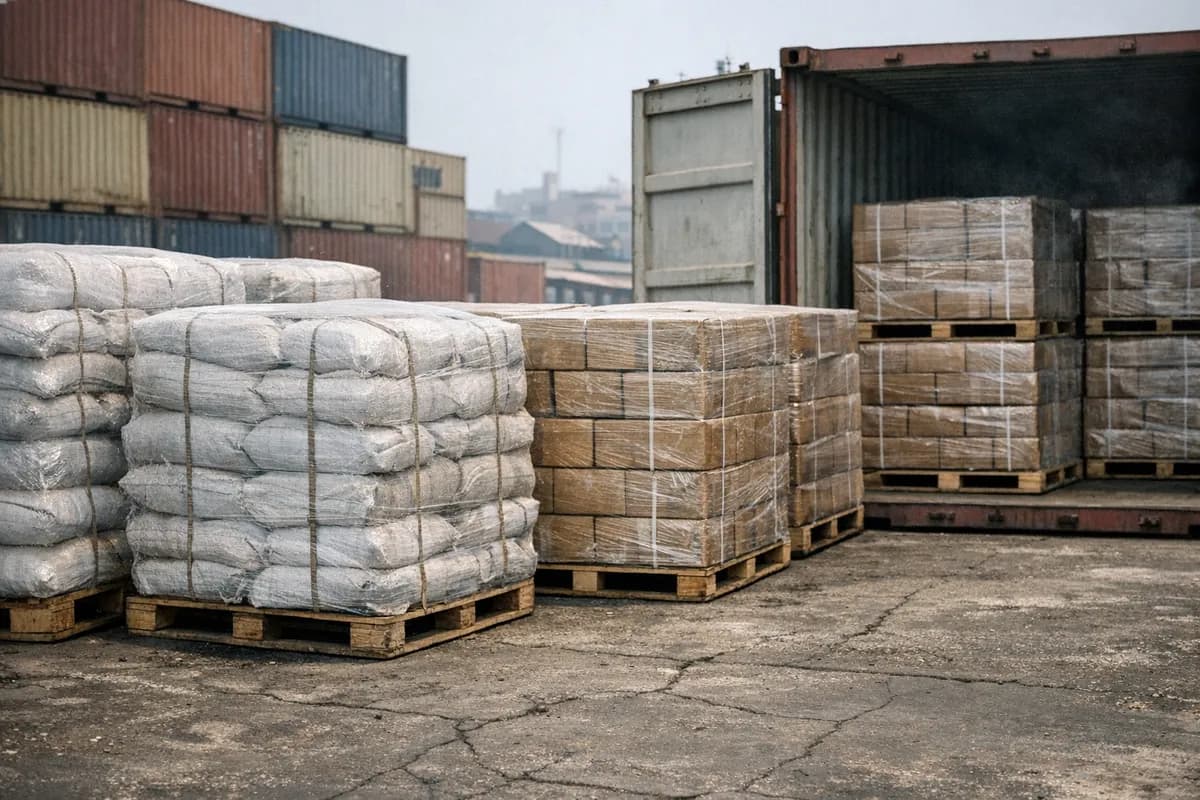
Packing has one purpose: keep the charcoal dry from factory dispatch to destination unloading. For sea freight, check the inner packing, the outer packing, the moisture barrier, the container condition, and the stuffing photos before the shipment is released.
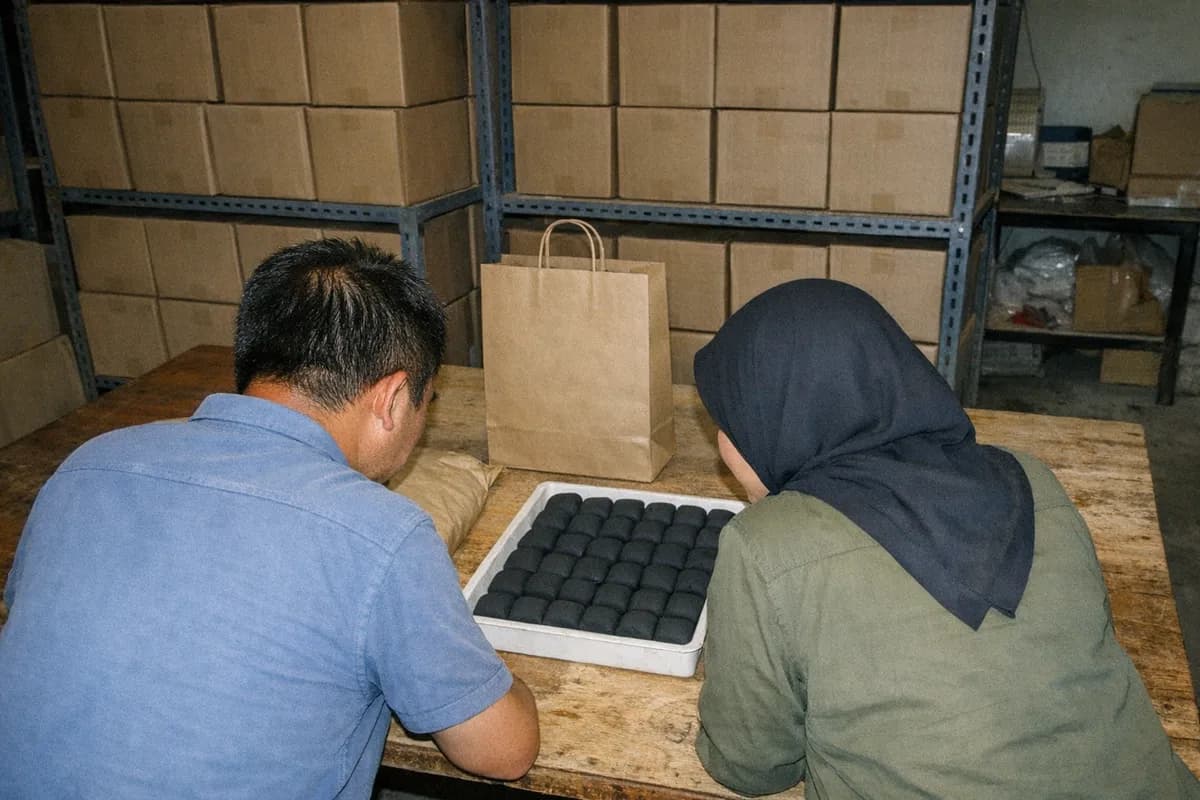
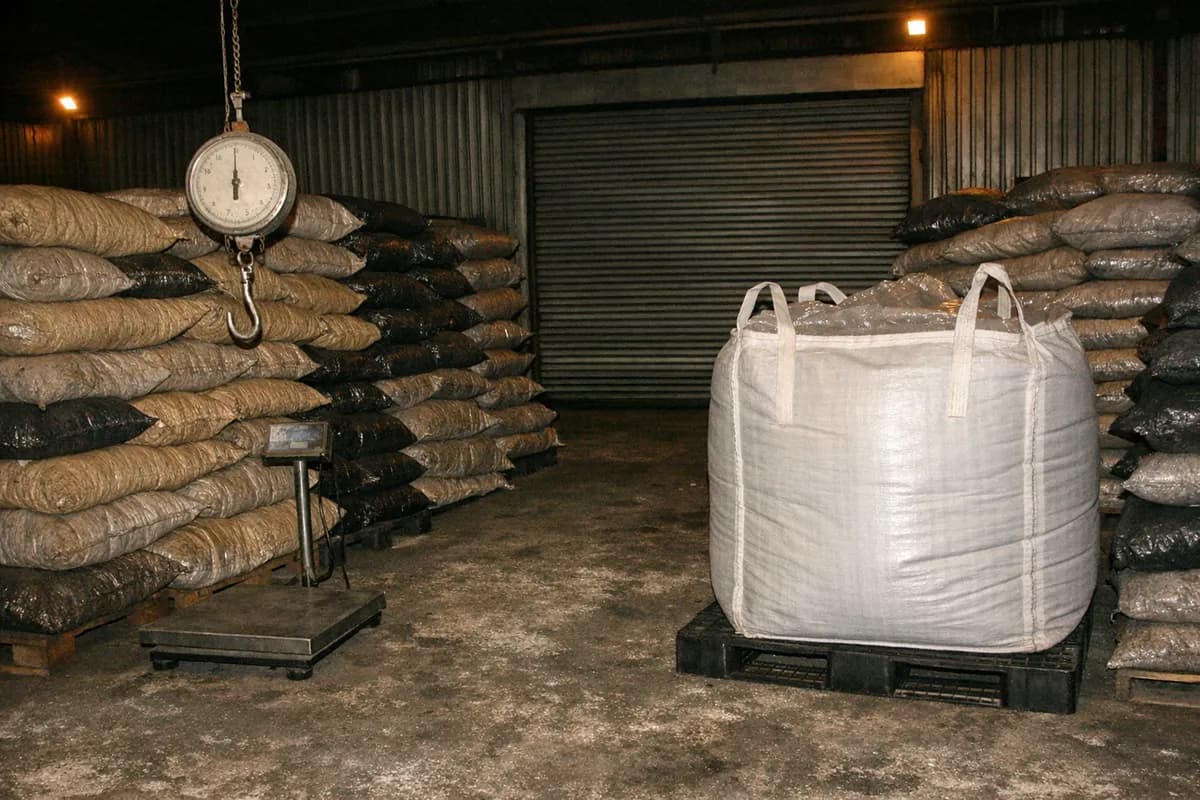
Each of our coconut forms has its own packing. Coconut shisha cubes go in 1 kg inner boxes and 10 kg master cartons. Hex shisha briquettes go in 1 kg inner boxes and 12 kg master cartons. Coconut BBQ briquettes go in 10 kg kraft bags or private-label retail bags. Natural Coconut Lump goes in 15 kg woven PP bags with a moisture liner. Coconut Charcoal Fines go in 25 kg woven PP bags or 1 t jumbo bags.
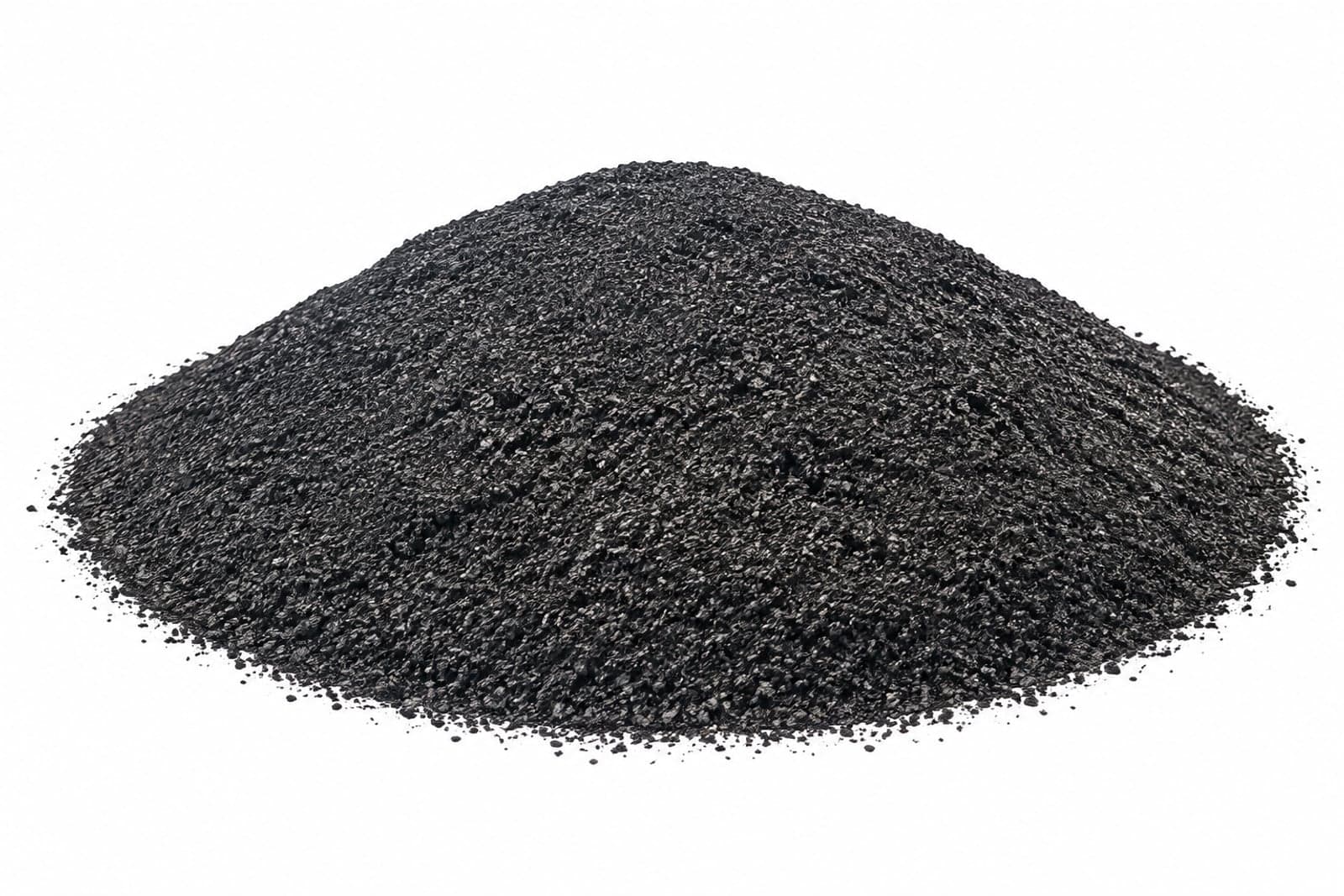
From the catalogue
Coconut Charcoal Fines
Granular carbon at 0 to 8 mm and 70% fixed carbon, sold as industrial feedstock.
ISO 9001:2015 · MSDS · Self-heating test (IMO) · Factory audit on request
View productThe liner matters most on loose shell pieces and fines. Write into the purchase order that the liner is mandatory, that bag mouths must be closed properly, and that torn bags are rejected at loading. Desiccants, pallet covers, container lining, or any other moisture control method should be agreed before the price is confirmed, because each changes materials, handling, or both.
Container inspection belongs in the stuffing record. Ask for photographs of the empty floor, side walls, roof, door gasket, container number, seal number, first loaded row, mid-load condition, and the final door view before closing. Any container with visible holes, wet flooring, a strong odour, or oil contamination should be rejected. Charcoal is porous, so odour and moisture are real damage, not cosmetic flaws.
Retail cartons need a compression check as well. Master cartons of shisha cubes and hex briquettes should never be loaded beneath wet bags or beside cargo that can leak. Carton marking must agree with the packing list, in particular SKU, quantity, batch or lot reference, and gross weight.
Still deciding between lump, briquette, and fines? Look over our coconut shell range before fixing the packing instruction. Which packing is right depends on whether the cargo will be sold as retail fuel, restaurant fuel, or industrial feedstock.
What Incoterm should I use, and what price context matters?
For a buyer with a forwarder who wants control of ocean freight, FOB is usually the cleaner term. CIF suits a buyer who wants the supplier to arrange freight to the destination port. EXW pushes more of the work onto the buyer, and DAP does not appear in our product facts for these coconut charcoal products.
For coconut shisha cubes, hex shisha briquettes, coconut BBQ briquettes, and Natural Coconut Lump, our listed Incoterms are FOB, CIF, and EXW. For Coconut Charcoal Fines, they are FOB and CIF. If your internal system insists on DAP, confirm that separately before requesting a landed comparison, as DAP is not among the listed terms.
The usual trap is comparing one supplier's FOB against another's CIF without stripping out freight. FOB should name the Indonesian port. CIF should name the destination port and include the freight and insurance scope agreed in the quote. EXW deserves care, since the buyer takes on inland pickup, export handling, and coordination at an earlier point.
No fixed MOQ appears in our product facts, so MOQ is confirmed in the quotation by product form and packing. A buyer asking for 1 t jumbo bags of industrial fines and a buyer asking for private-label retail cartons are not describing the same costing exercise.
Grade, packing, Incoterm, shipment volume, and season all feed into price. For CIF, build the freight component from a current carrier or forwarder quotation for the named destination port rather than an old estimate. Indonesian coconut charcoal has no daily terminal market price we could offer as a stable benchmark.
When requesting a quote, include product form, target specification, packing, destination port, Incoterm, monthly volume estimate, document list, and inspection requirement. Buyers sourcing feedstock for briquette production can also review our industrial charcoal page before asking about fines.
What lab tests and supplier audit points should I insist on before shipment?
Insist on a COA that matches both the agreed product specification and the shipment lot, then confirm packing and loading with photographs or inspection. The core lab checks are moisture, ash, fixed carbon, volatile matter where applicable, and calorific value where applicable.
ASTM D1762-84, published by ASTM International, is a standard test method for chemical analysis of wood charcoal covering moisture, volatile matter, ash, and the calculation of fixed carbon. Where a laboratory uses a different method, the report should say which one, so your technical team can compare results across suppliers and shipments.
A COA should never float free of the order. It should carry the supplier, the product name, the sample or lot reference, the test date, the measured values, the test method where available, and the laboratory's identity. Moisture limits differ by product: 8% max for our coconut shisha cubes, 10% max for Natural Coconut Lump, and 12% max for Coconut Charcoal Fines. Apply the limit that belongs to the product you are buying, never a limit copied from another form.
Audit the supplier before you commit to repeat volume. Worthwhile checks include raw material segregation, drying control, the briquette pressing or screening process, finished goods storage, bag or carton closure, batch marking, retained samples, the container stuffing procedure, and document control. Our listed coconut charcoal products hold ISO 9001:2015 certification, a quality management system standard published by the International Organization for Standardization, but the product sample and the shipment checks still need the buyer's approval.
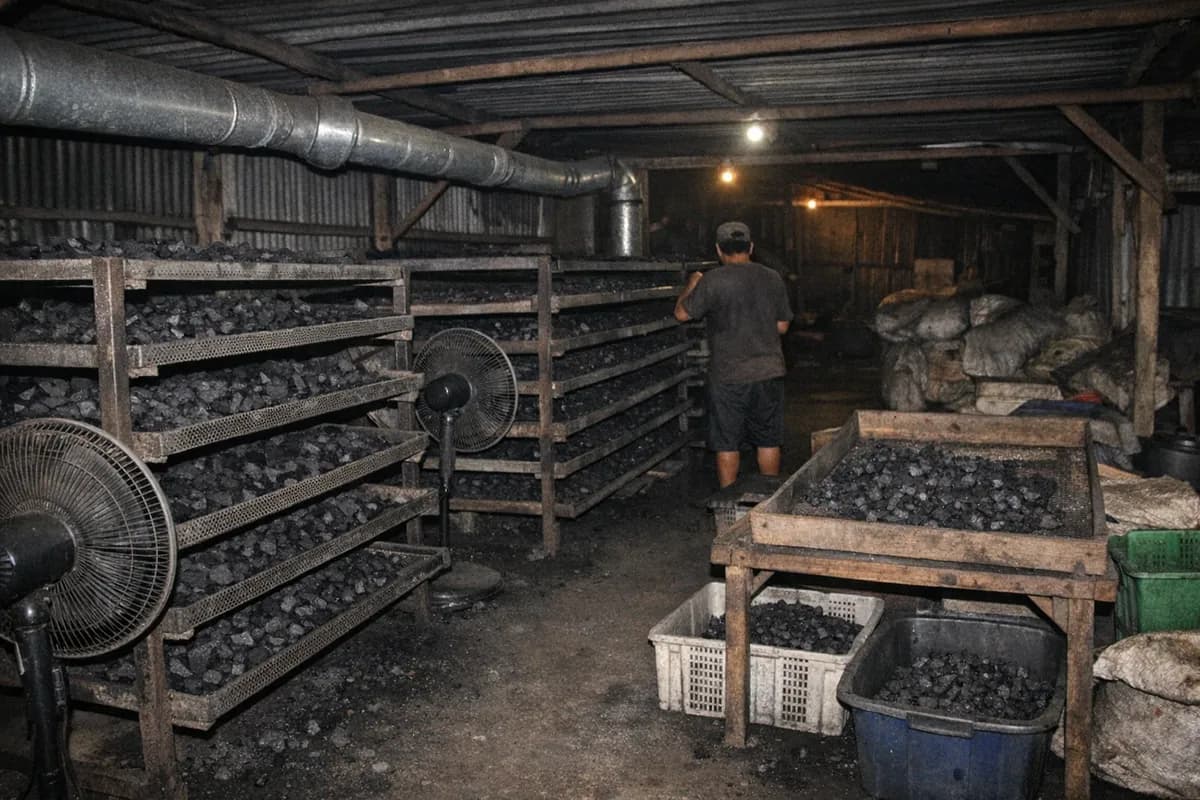
Before payment or document release, set four records side by side: the signed specification, the COA, the packing list, and the stuffing photos. When those four agree, the shipment moves far more easily through the importer, the customs broker, the bank, and the destination warehouse. If you would like us to check a draft document list against a planned Indonesian coconut charcoal shipment, send it through our contact page together with the destination port and the payment term.