Indonesian Coconut BBQ Briquettes Wholesale MOQ Guide
How wholesale buyers of Indonesian coconut BBQ briquettes should approach MOQ: what drives it, private-label bags, lead time to FOB, mixed loads, samples, and the RFQ.
A carton price is rarely what an importer searching for coconut BBQ briquettes wholesale Indonesia MOQ actually needs. What matters is how landed cost moves with order size, packing format, private-label work, container planning, samples, and the Incoterm chosen.
These are questions we deal with daily as an export desk. With Indonesian coconut shell BBQ briquettes, the classic error is asking for a “price per ton” before the packing plan, the destination port, the label requirement, and the document set have been settled. The result is a quote that looks tidy and then shifts the moment the buyer mentions retail bags, mixed products, or a different shipping term.
What is a typical MOQ for coconut BBQ briquettes from Indonesia?
No fixed MOQ for Coconut BBQ Briquettes appears in our published product facts. We set it in the written quotation, once the packing format, label work, Incoterm, and shipment plan have been reviewed. In wholesale buying, MOQ behaves as a commercial variable rather than a factory constant.
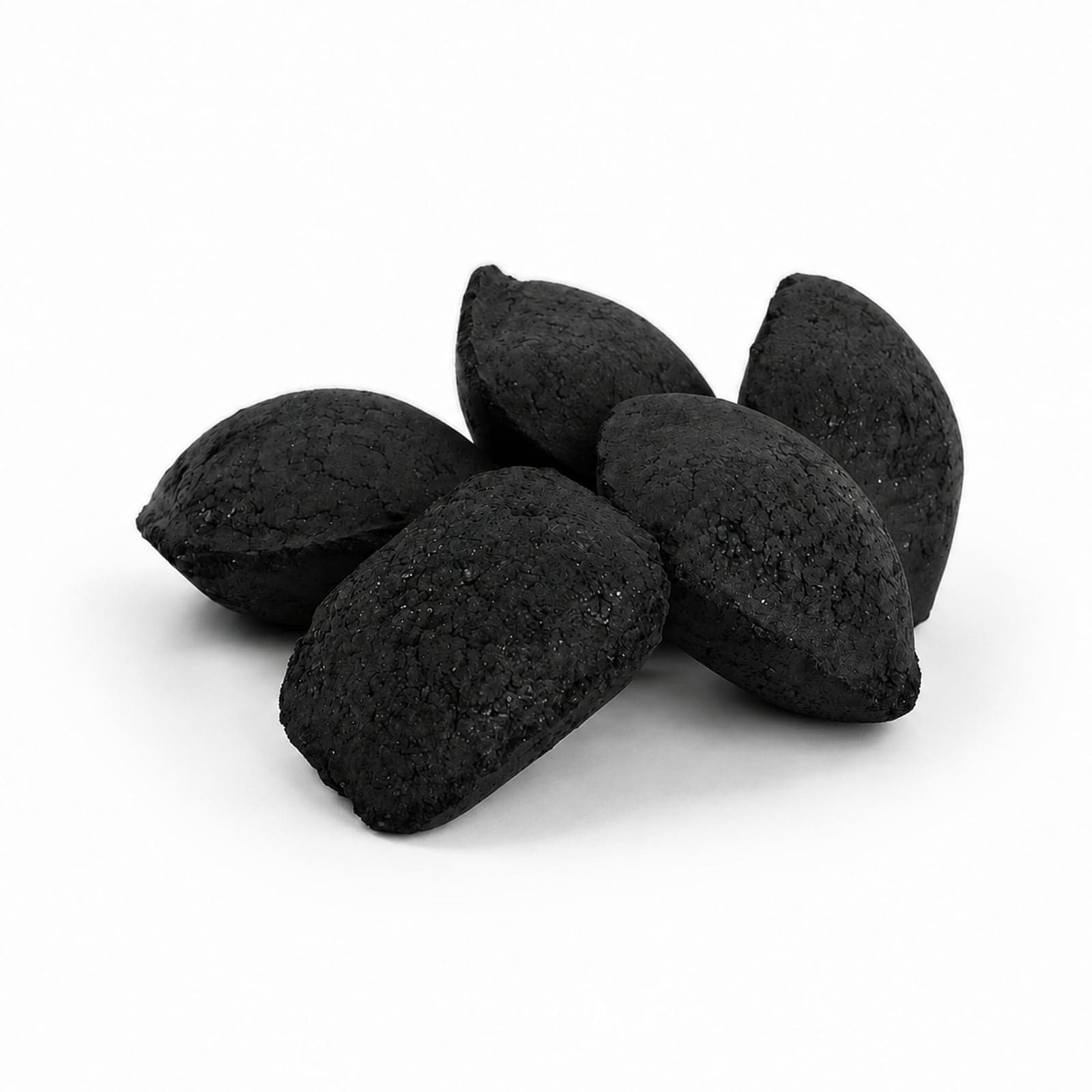
Before MOQ comes up at all, the product specification should be pinned down. Our Coconut BBQ Briquettes are coconut shell pillow briquettes measuring 50 x 35 x 25 mm. Fixed carbon is 70% minimum, ash 4% maximum, moisture 8% maximum, calorific value 6,500 kcal/kg minimum, and burn time 2.5 hours plus. Packing is listed as a 10 kg kraft bag or a private-label retail bag. Certification is listed as ISO 9001:2015, the Incoterms as FOB, CIF, and EXW, and the HS code in our product facts is 4402.90.
From the catalogue
Coconut BBQ Charcoal Briquettes
Flat grilling blocks of coconut shell in 40 x 30 x 25 mm and 50 x 40 x 25 mm, at 80% fixed carbon and 150 to 200 minutes.
ISO 9001:2015 · MSDS · Self-heating test (IMO) · Factory audit on request
View product
Change the commercial job and the MOQ changes with it. Costing a plain kraft bag order is generally simpler than costing a retail programme with printed film, carton artwork, barcode positions, language rules, and several SKUs. Likewise, a container holding one product is simpler than a mixed load in which bag sizes, carton counts, and loading sequences all need checking.
Price context belongs in the same conversation. We keep spot market prices out of articles because they go stale. A usable quotation is built from grade, packing, Incoterm, volume, label work, production timing, and freight basis. On CIF terms the freight element should rest on a current forwarder or carrier quote for the named destination port. On FOB terms the buyer's forwarder can price ocean freight separately.
Still at the product-selection stage? Start with the pillow briquette format, then send the destination port and the planned packing through our contact page for a current MOQ and quotation.
Can I get private-label retail bags for wholesale orders?
Yes. Alongside the 10 kg kraft bag, our listed packing options for Coconut BBQ Briquettes include a private-label retail bag.
Any private-label work needs to be specified before we draw up the pro forma invoice. From the buyer we need the bag size, the artwork file, the brand name, the barcode position, language requirements, the carton or master pack plan if one is used, and any retail marking rules at destination. Where the artwork is not yet ready, the quote should state plainly whether it prices plain packing, stickered packing, or printed retail packing.
Retail packaging moves the MOQ because printed materials usually need a procurement run of their own. It also moves freight: a retail bag programme can alter outer dimensions, stacking strength, and the ratio of net weight to shipped volume. For depot distribution or food service customers, a 10 kg kraft bag plan is usually the easier route. Retail bags earn their place when the importer sells through supermarkets, garden centres, petrol stations, or online, where shelf presentation and barcode control decide.
Never approve retail packing from a PDF alone. Depending on order value and timeline, ask for a pre-production packing photo or a physical sample. Check seal strength, print position, bag thickness, language, barcode scan, net weight marking, importer details, and the carton marking if cartons are involved.
The best RFQ sentence leaves nothing open: “Quote Coconut BBQ Briquettes in private-label retail bags under FOB Indonesia, with artwork supplied by buyer, destination port X for freight reference, and monthly volume estimate Y.” If you would like us to check whether your retail bag concept is workable before a full quotation, send the artwork brief through our contact page.
How long does a wholesale order take from factory to FOB port in Indonesia?
Since our product facts do not publish a standard lead time, the shipment schedule has to be confirmed in the quotation. For an FOB order, ask for the production ready date, the planned stuffing window, the port, and the timing of document release.
A wholesale BBQ briquette order passes through several gates. The buyer approves the specification and the packing. Any private-label material is confirmed. Production or allocation is scheduled. The goods are packed, checked, and made ready for inland transport. Finally the container is stuffed, sealed, and handed into the FOB export process at the named Indonesian port.
FOB means nothing without a named port. Under Incoterms 2020, published by the International Chamber of Commerce, delivery under FOB takes place when the goods are on board the vessel at the named port of shipment. In practice your forwarder needs the supplier's ready date early enough to book the vessel, position the empty container, and hit the carrier's cut-off.
Private-label retail packing can hold production back before it even starts. The delay is often nowhere near the briquette press. It sits in artwork approval, the procurement of printed material, a barcode correction, or retail carton confirmation. If your sales launch has a hard delivery window, put that window in the RFQ rather than asking for the earliest possible shipment.
For FOB planning, have the supplier confirm in writing the port of loading, the production ready date, the earliest stuffing date, the latest acceptable date for artwork approval, whether inspection takes place before packing or before stuffing, and which documents will be issued after shipment. Where payment is by LC, the LC wording has to line up with the shipment window before production begins.
Do Indonesian suppliers accept mixed-product container loads?
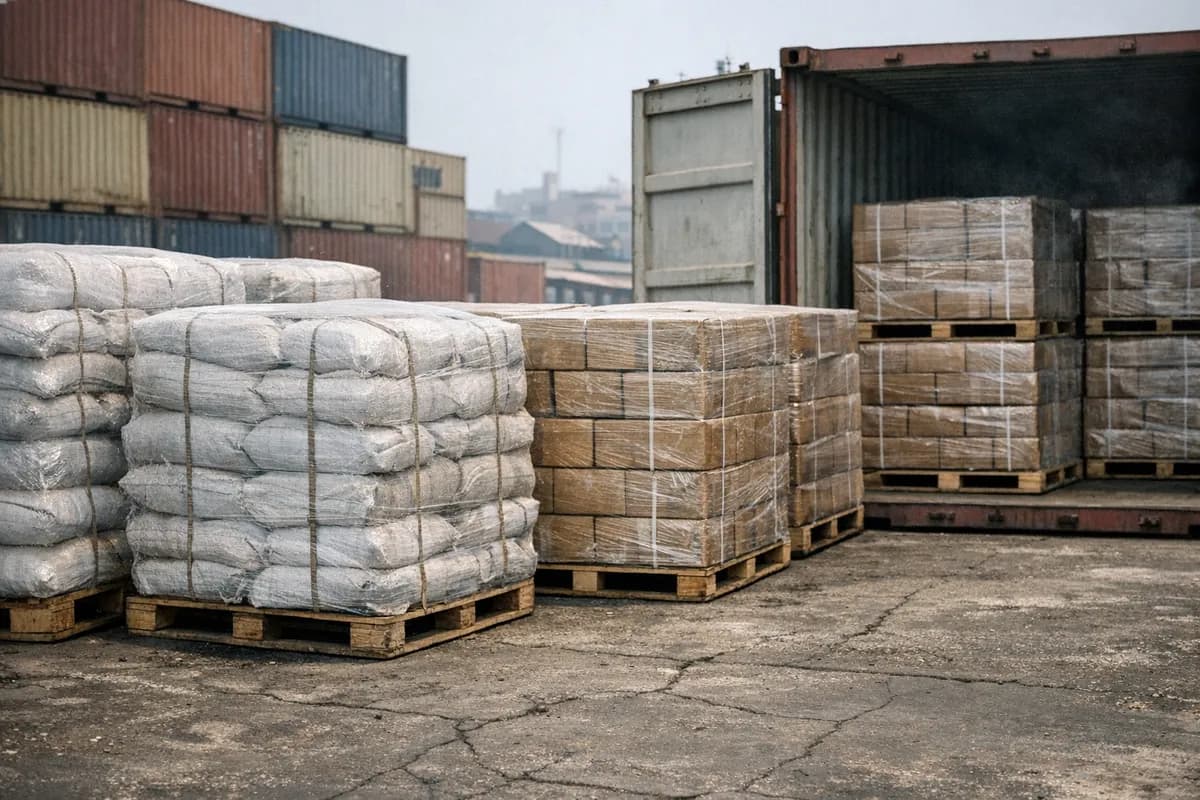
Sharing an origin does not make products automatically compatible in one container. A mixed load has to be checked for product compatibility, packing strength, production schedule, document wording, and the loading plan.
The request to combine BBQ briquettes with coconut lump, hardwood lump, or shisha briquettes is a common one, and the motives are sound: testing several SKUs, supplying restaurants and retail from one arrival, or using up spare container space. The risk is that each product can carry a different bag strength, carton strength, moisture limit, ash limit, shape, stacking behaviour, and customer document set.
Buyers can compare our BBQ, restaurant, shisha, and industrial formats through the products overview. For food service buyers weighing whether one container should cover both BBQ retail and commercial kitchen demand, the restaurant and food service range is the place to look.
A mixed-container RFQ should break the load down by product and packing. “One mixed container of charcoal” is not enough. State the target quantity of Coconut BBQ Briquettes, the packing for each SKU, the Incoterm, the destination port, and whether partial availability is acceptable if one SKU is not ready. The supplier can then confirm whether the mix is feasible, how each line will appear on the packing list, and whether the COA will be issued per product or per shipment.
Loading order is not a detail. Dense, heavy bags must not sit on retail cartons. Products with different packaging need enough separation for clean unloading at destination. And if the buyer's warehouse needs palletized unloading, say so before the quote, because pallets, wrapping, loading pattern, and container utilization can all change as a result.
How are samples charged and what tests should buyers run before production?
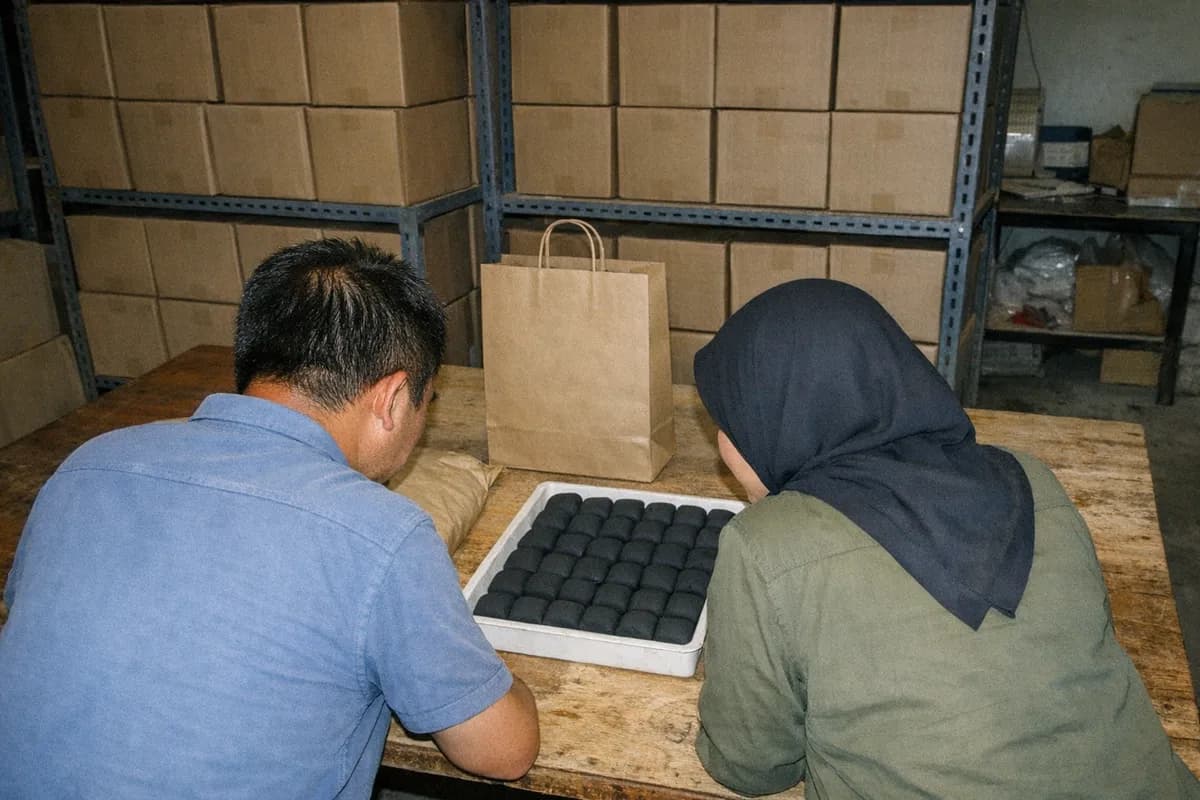
Sample cost, courier cost, preparation time, and refund policy are not stated in our published product facts, so confirm all four before requesting samples. A sample only has value if it represents the same product form and packing basis as the order you intend to place.
For Coconut BBQ Briquettes, sample approval should cover the 50 x 35 x 25 mm pillow shape, handling strength, ignition behaviour, smoke, odour, spark level, ash appearance, burn consistency, and whether the briquette keeps its form in use. Retail sellers should also test how the bag looks after handling, since a damaged retail pack turns into a claim even when the briquette inside is fine.
Lab tests should follow the agreed specification. ASTM D1762-84, published by ASTM International, is a standard test method for chemical analysis of wood charcoal covering moisture, volatile matter, ash, and the calculation of fixed carbon. Where your lab uses a different method, have it named on the report so your technical team can compare results between suppliers.
A well-kept sample file contains photos, a sample label, the dispatch date, the product name, the production or trial reference where one exists, and the packing assumption behind the quote. Keep part of the sample sealed as a reference. Should a shipment claim arise later, the retained sample helps distinguish a production problem from storage, moisture, or handling damage after arrival.
If the commercial order will use a different packing format, do not approve mass production off the sample. A loose sample, or one in a plain bag, cannot prove that a private-label retail pack will seal properly, stack safely, or satisfy destination marking rules.
What information should an RFQ include for accurate landed cost quotes?
A useful RFQ tells us four things: the product you want, how it is to be packed, where it is going, and which cost point you want quoted. Without those, all a supplier can offer is an estimate, and estimated landed cost is of little use in procurement.
For the product line, name Coconut BBQ Briquettes and say whether you want the listed 10 kg kraft bag or a private-label retail bag. Then add expected order volume, destination port, preferred Incoterm, payment method, required documents, inspection plan, and target shipment window. If FOB and CIF are both under consideration, ask for both on the same packing and quantity, so your team is not comparing two different cost structures.
Break landed cost into pieces your team can verify: product cost at the agreed Incoterm, ocean freight if CIF is requested, insurance where it applies, destination duties and taxes from your broker, port charges, inland haulage, inspection cost, and retail packing cost where it is separate. Heading 4402 of the World Customs Organization Harmonized System covers wood charcoal, including shell or nut charcoal, whether or not agglomerated, and our Coconut BBQ Briquettes show HS code 4402.90 in the product facts. The final national import code past the six-digit HS level is still your broker's decision.
The strongest RFQs also say what is negotiable. Flexible volume with fixed packaging? Say so. Flexible packing with a fixed landed cost target? Say that instead. That gives the factory room to propose a workable MOQ, a simpler packing plan, or a better container mix without having to guess your priorities.
With Indonesian coconut BBQ briquettes, MOQ is not a figure to borrow from another importer. It falls out of product form, packing, label work, shipment term, and container plan. Put those facts into the RFQ and ask for the MOQ, the lead time, and the price basis together in one written quotation.