Indonesian Shisha Charcoal Factory Audit Guide
What a factory audit for Indonesian shisha charcoal covers, how it differs from the batch CoA, which inspection bodies importers accept, and when in the buying timeline to book it.

Before the first container of coconut shisha charcoal is booked, programme buyers and some carriers want a factory audit. It does not stand in for the batch Certificate of Analysis. It answers a separate question: are the production site, the process controls, and the export documentation routine dependable enough to carry repeat shipments?
When an RFQ names the destination port, the carrier, or a distributor compliance file, we arrange factory audits through SGS, Intertek, or Carsurin at cost. This guide describes what an importer should expect from an Indonesian shisha charcoal factory audit in 2026.
What is a factory audit for Indonesian shisha charcoal?
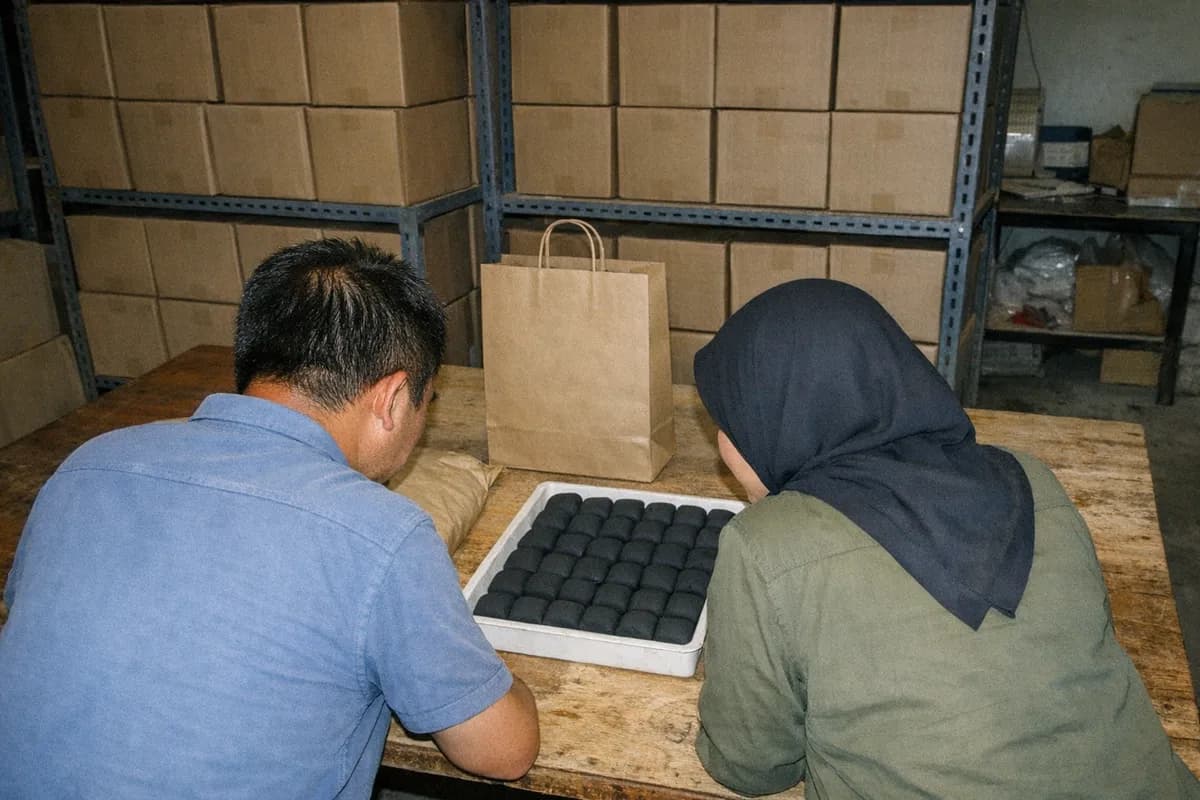
A factory audit is an independent check of the production facility, the quality records, and the export documentation routine behind a shisha charcoal supply. The report confirms that the supplier can manufacture to a written specification, keep batch records, and produce the document set your forwarder expects.
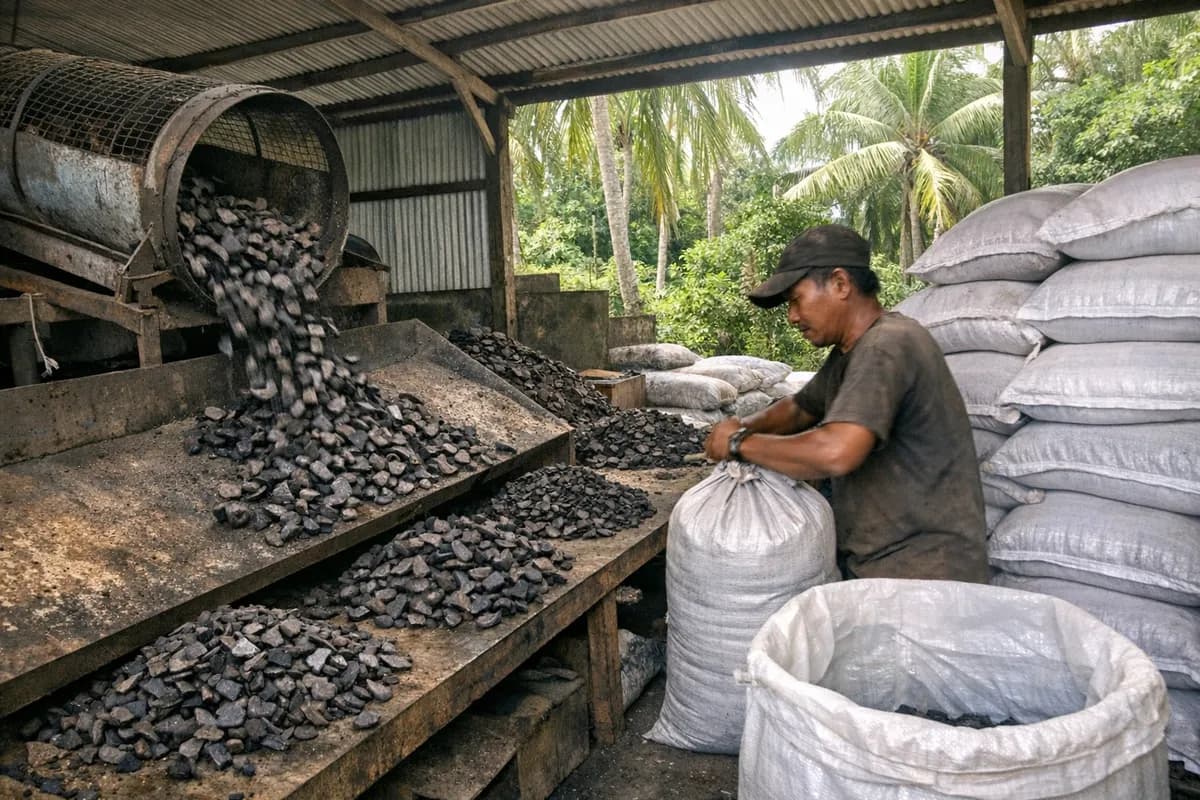
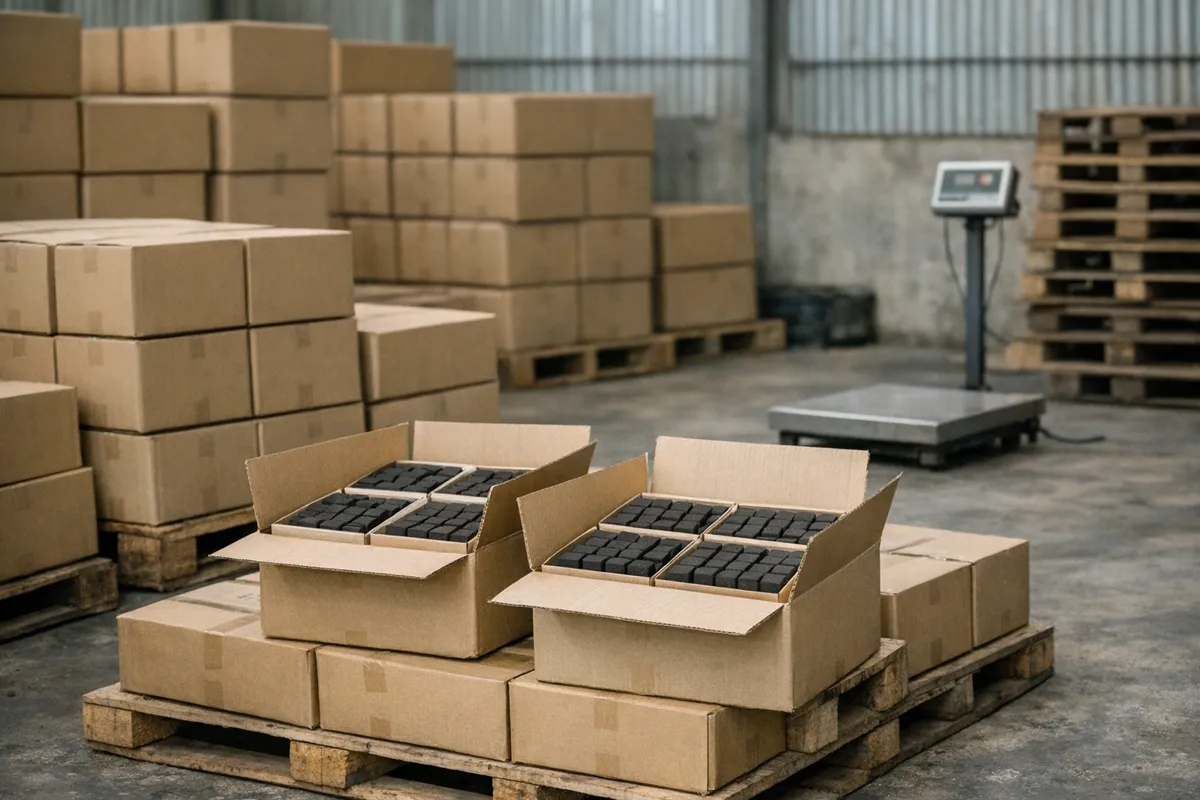
For coconut shisha cubes and hex briquettes, the audit scope normally takes in carbonization, pressing, drying, screening, packing, and the hand-over to export documentation. The auditor samples process records, interviews the quality contact, and can witness a packing line when the visit falls during production.
This is not the same as a pre-shipment inspection of one container. Pre-shipment inspection looks at the lot being loaded. A factory audit looks at whether the system behind many lots is under control. A single programme can require both.
The two formats buyers audit most, 25 mm cubes and 20 x 50 mm hex briquettes, are on our shisha grade collection. Send your distributor's compliance template through our contact page before booking, and we will confirm whether FA, batch CoA, or both are needed.
How does a factory audit differ from a batch CoA?
A batch CoA quotes the chemistry and physical limits of the loaded shipment. A factory audit quotes the reliability of the system that made it. Importers need both, on different timelines.
The CoA should list moisture, ash, fixed carbon, volatile matter where applicable, calorific value where applicable, and any sizing checks the buyer agreed, all for the loaded batches. It is tied to the container number or the lot reference on the packing list.
The factory audit report covers site conditions, document control, the equipment used for pressing and drying, retention of internal burn records, and whether export files are prepared consistently. It replaces nothing at the batch level.
A practical rule of thumb: FA before the first purchase order on a new programme, then CoA plus pre-shipment inspection on every container within it. A supplier who offers a factory brochure but no batch CoA on the first shipment presents a risk of its own, separate from any missing FA.
Which inspection bodies issue factory audits importers accept?
Among coconut charcoal importers and the forwarders serving the Middle East and Europe, SGS, Intertek, and Carsurin are the names cited most often. Before booking, the buyer should confirm the exact report title the carrier or distributor wants.
Some buyers ask for a document titled factory audit. Others ask for a manufacturing audit or a supplier assessment. Scope matters more than the label on the PDF cover. Ask the inspection company to list pressing lines, drying controls, the internal lab or burn-test routine, packing areas, and the document issuance steps.
Inspection cost is passed through at invoice cost with no handling margin. If FA is needed before production, book the slot at order confirmation, because a late audit request can push back the first OEM packing run.
Buyers comparing inspection scope on our coconut shisha cubes should ask every shortlisted Indonesian factory for the same audit checklist, so the reports can be set side by side.
From the catalogue
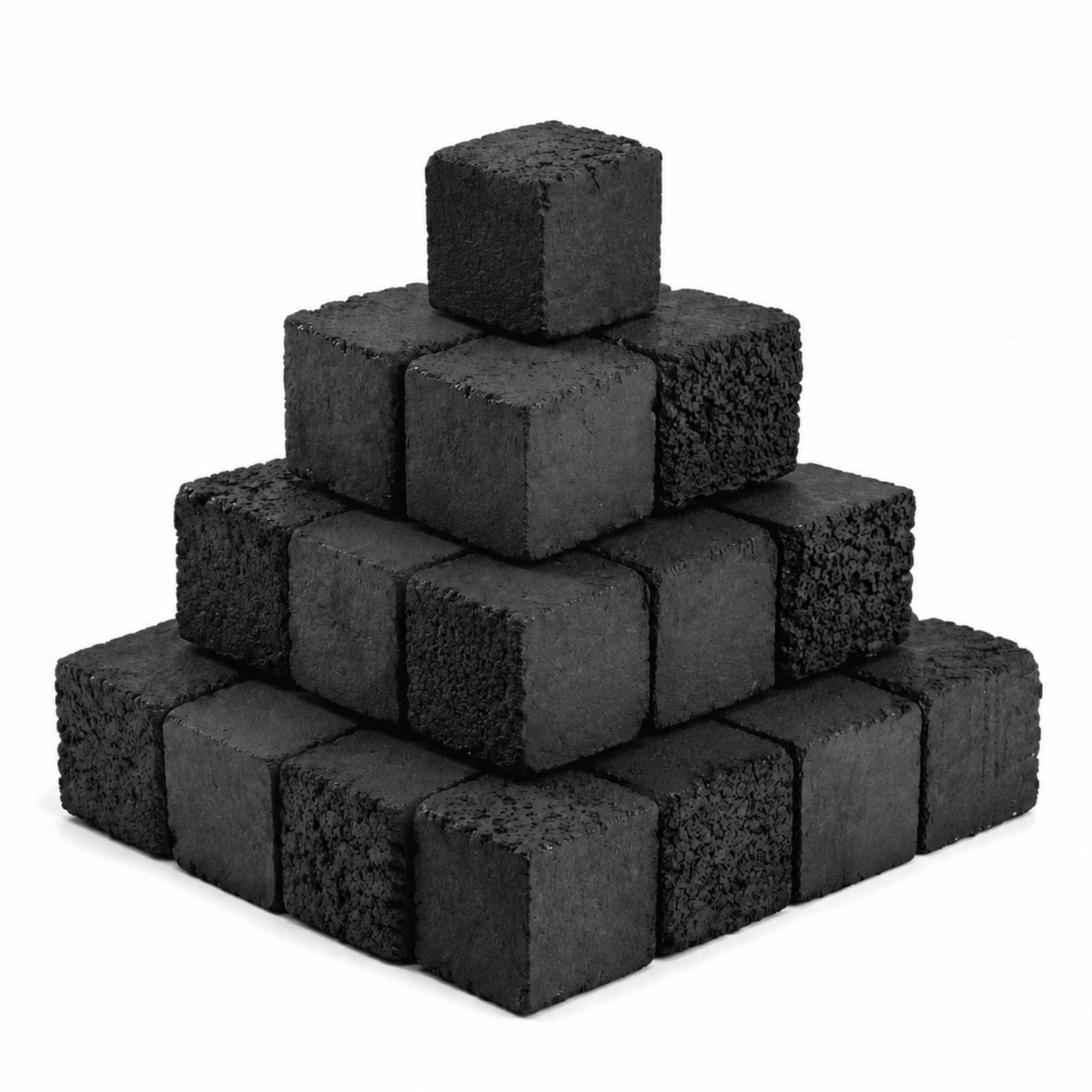
Coconut Shisha Charcoal Cubes
Coconut shell cubes pressed in 22, 25, 26, and 27 mm: 80% fixed carbon, 1.9% white ash, and 80 to 125 minutes per load.
ISO 9001:2015 · MSDS · Self-heating test (IMO) · Factory audit on request
View productWhat should buyers verify during a shisha charcoal factory audit?
Four areas: raw material intake, process control, finished-product testing, and preparation of export documentation. Leave any one of them out and the risk of repeat shipment problems remains, however well a single sample burns.
Raw material intake should show contracted coconut shell sources and screening before carbonization. Process control should show pressing parameters, drying targets, and rejection rules for batches that miss spec. Finished-product testing should show internal burn records and retained samples. Export documentation should show the MSDS, the self-heating test evidence, and CoA templates linked to batch numbers.
For shisha charcoal specifically, also check cube size screening, inner box strength for retail programmes, and whether broken pieces are pulled before master-carton packing. Lounge buyers care about ash colour and session length. Retail buyers care about carton presentation and barcode placement. The audit scope should name the market you serve.
When should a factory audit be booked in the buying timeline?
On large OEM programmes where the distributor or carrier requires FA before the first booking, book the audit before paying the deposit. Repeat programme buyers reusing a valid audit file need only book a renewal when the contract term ends or the production site changes.
A clean timeline runs like this:
- Shortlist suppliers on written specifications and samples.
- Establish whether FA is mandatory for your market or carrier.
- Book the audit scope with the inspection body and share the visit window with the factory.
- Review the FA report before artwork approval and production slot confirmation.
- Issue the purchase order with batch CoA, MSDS, and self-heating test requirements for every container.
Where private-label artwork forms part of the first run, bring packing line approval into the audit visit. A strong chemistry result counts for little if the retail box fails in transit.
What documents should follow a passed factory audit?
A passed factory audit changes nothing about the shipment document list in the purchase order. Invoice, packing list, certificate of origin, batch CoA, MSDS, and the non-self-heating test report are all still required.
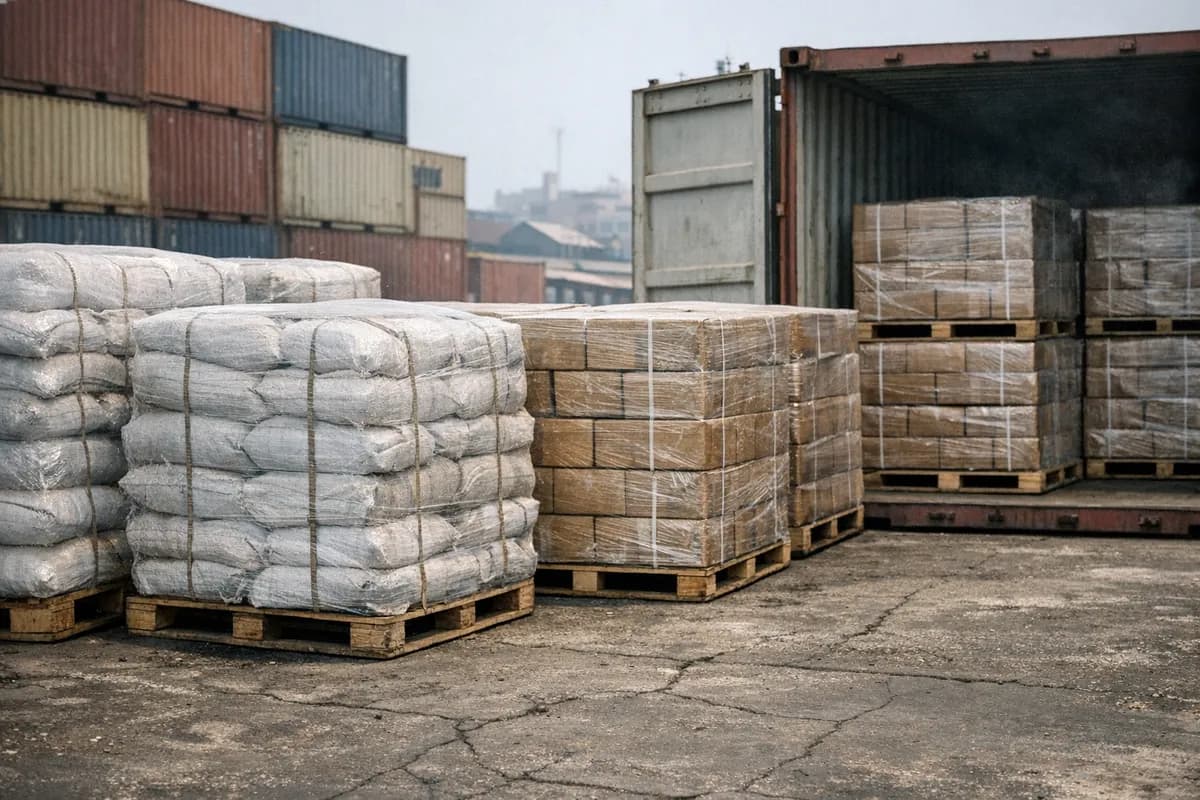
For shisha charcoal, our standard export file holds the commercial invoice, packing list, certificate of origin when requested, batch CoA, MSDS, and the self-heating test report used for IMDG Class 4.2 bookings. A factory audit summary and a vanning certificate can be added once the RFQ names the carrier.
The export classification on our coconut charcoal product facts is HS code 4402.90. Keep it consistent across the quotation, the purchase order, and the customs instruction.
Buyers planning distribution in the Middle East should read our export checklist article together with this audit guide, then review the shisha application browse page for format selection before sending a formal RFQ.