Import Coconut Charcoal to Saudi Arabia: Buyer Guide
Saudi importers of Indonesian coconut charcoal: the document set, IMDG Class 4.2 booking, packing per format, Dammam and Jeddah, and when to book a factory audit.
The risk on a Saudi Arabia charcoal programme is the same one we see across the Gulf: an excellent product sample attached to a weak shipping file. To arrive cleanly, the container has to clear the carrier's dangerous goods rules and land with packing that matches whatever retail or bulk format was approved.
Shisha cubes, hex briquettes, BBQ charcoal, lump, and fines all go from our factory to Saudi Arabia. This guide condenses the document, packing, and booking routine we follow on KSA-bound containers.
What export documents do Saudi importers request most often?
The base file consists of the commercial invoice, packing list, bill of lading, batch CoA, MSDS, and the self-heating test report. A certificate of origin is added whenever the buyer, the broker, or the bank asks for it.
Distributors running their own hookah charcoal brands in Saudi Arabia usually want more before they release payment: packing photos, batch marks, and carton counts that reconcile with the packing list.
Fix the complete document list in the purchase order. A late request for a certificate under a different title can hold up sailing or produce an LC discrepancy.
The documentation routine we run for each container is described on our services page. Send your KSA broker's checklist along with the quote request.
Which product forms do Saudi shisha distributors import from Indonesia?
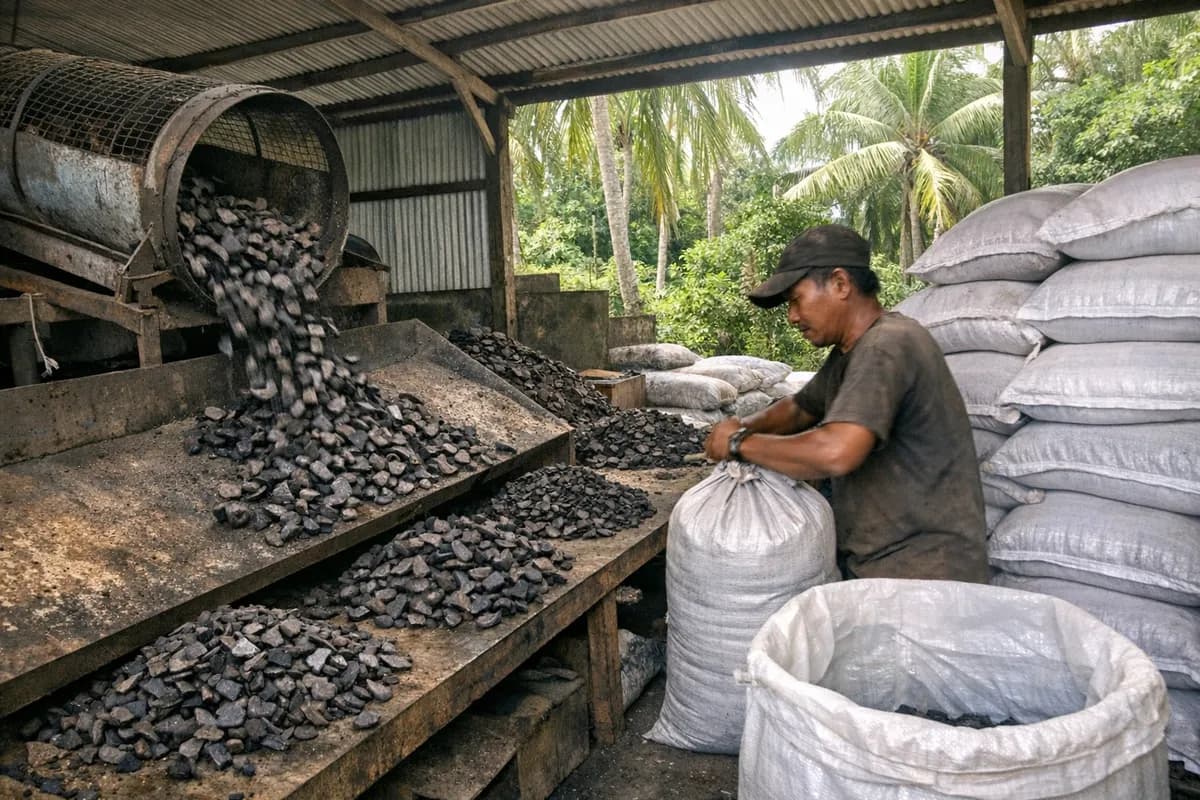
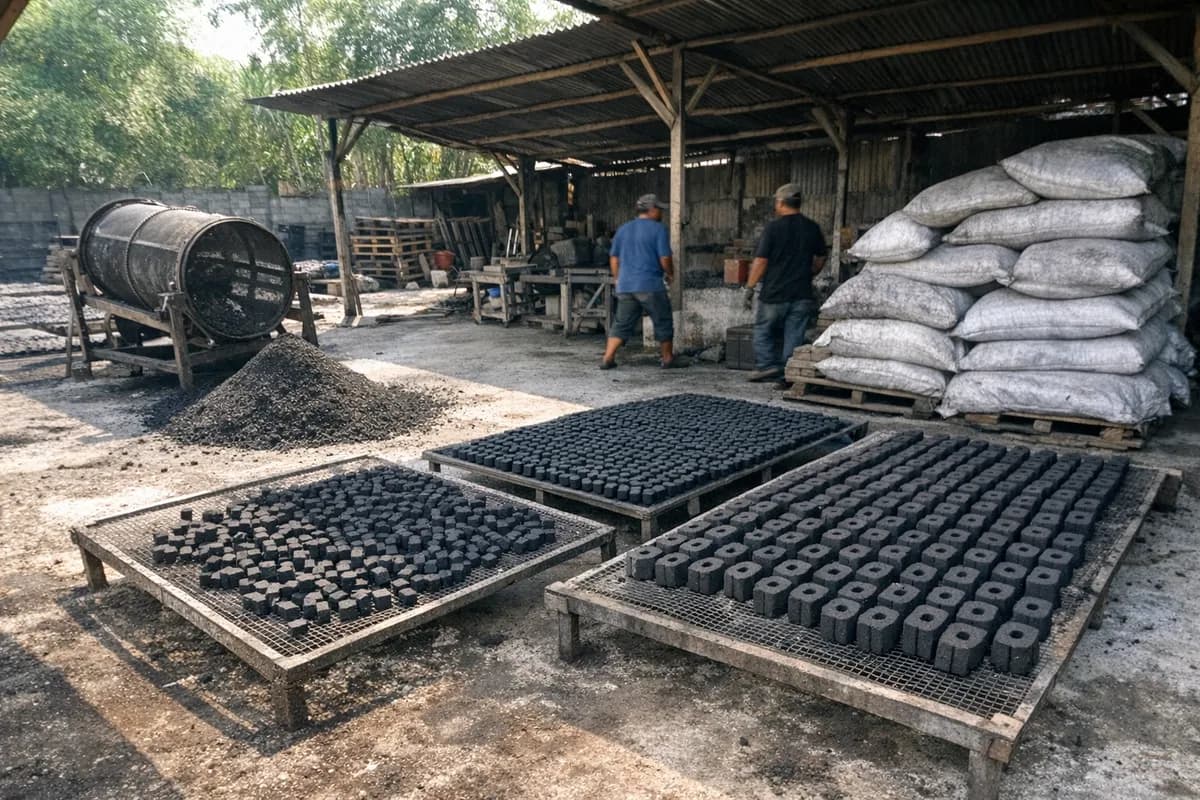
Volume-wise, 25 mm coconut shisha cubes and hexagonal sticks lead our shisha grade collection. BBQ distributors take pillow briquettes, and food service buyers sometimes add hardwood lump for their ovens.
Distributors testing retail and lounge channels in a single shipment often load mixed containers. Put the format mix in the RFQ so the loading plan and the CoA references stay unambiguous.
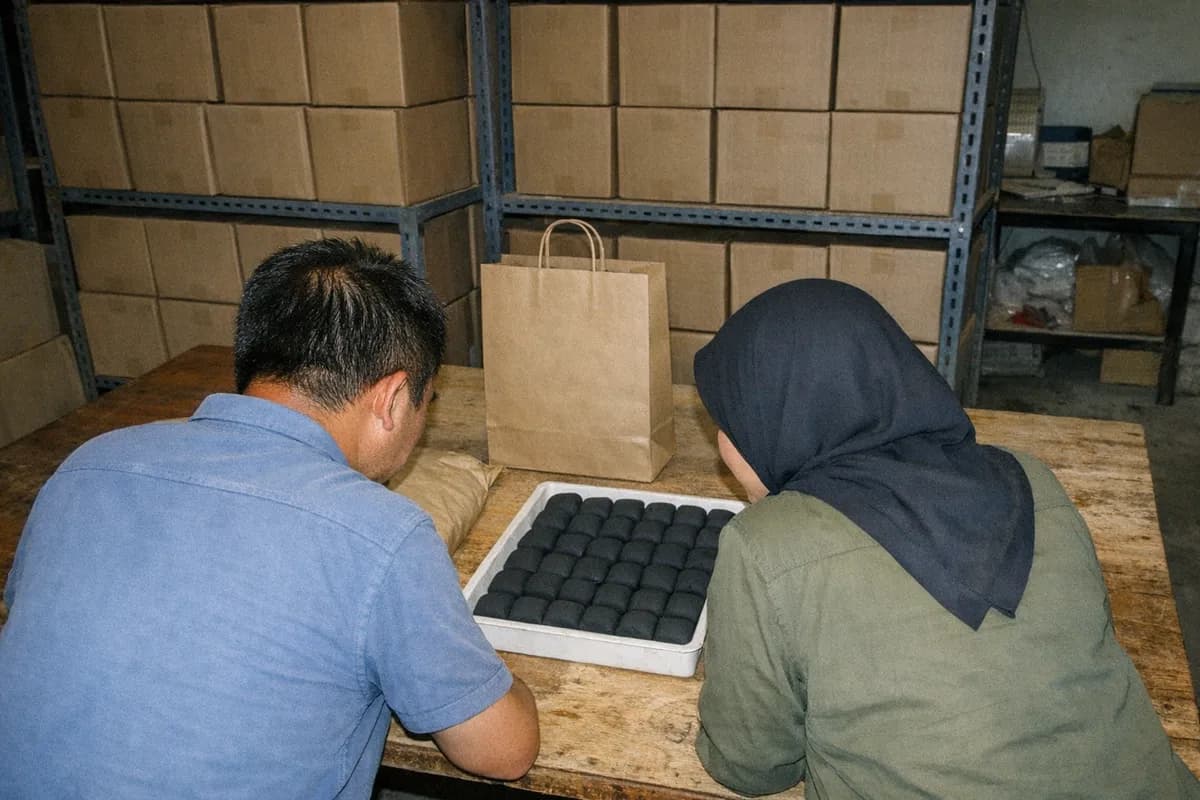
Private-label boxes need sign-off on dielines, language text, and barcode placement before printing. For a trial container, neutral boxes are available.
How does dangerous goods compliance work for Saudi charcoal shipments?
Coconut charcoal is booked under IMDG Class 4.2. Carriers want an MSDS plus a current non-self-heating test report that describes the packed product form.
The booking instruction, the MSDS, and the packing list must all carry the same product description. In export paperwork for coconut charcoal, UN 1361 is the entry that comes up most often.
Our IMDG shipping guide sets out how the self-heating test differs from the batch CoA. Both are mandatory, and they run in parallel.
What packing should Saudi buyers specify on the purchase order?
For shisha: a 1 kg inner box inside a 10 kg or 12 kg master carton. For BBQ: a 10 kg kraft bag or a retail bag under your own label. For lump: a 15 kg woven PP bag with a moisture liner. For fines: a 25 kg woven PP bag or a 1 t jumbo bag.
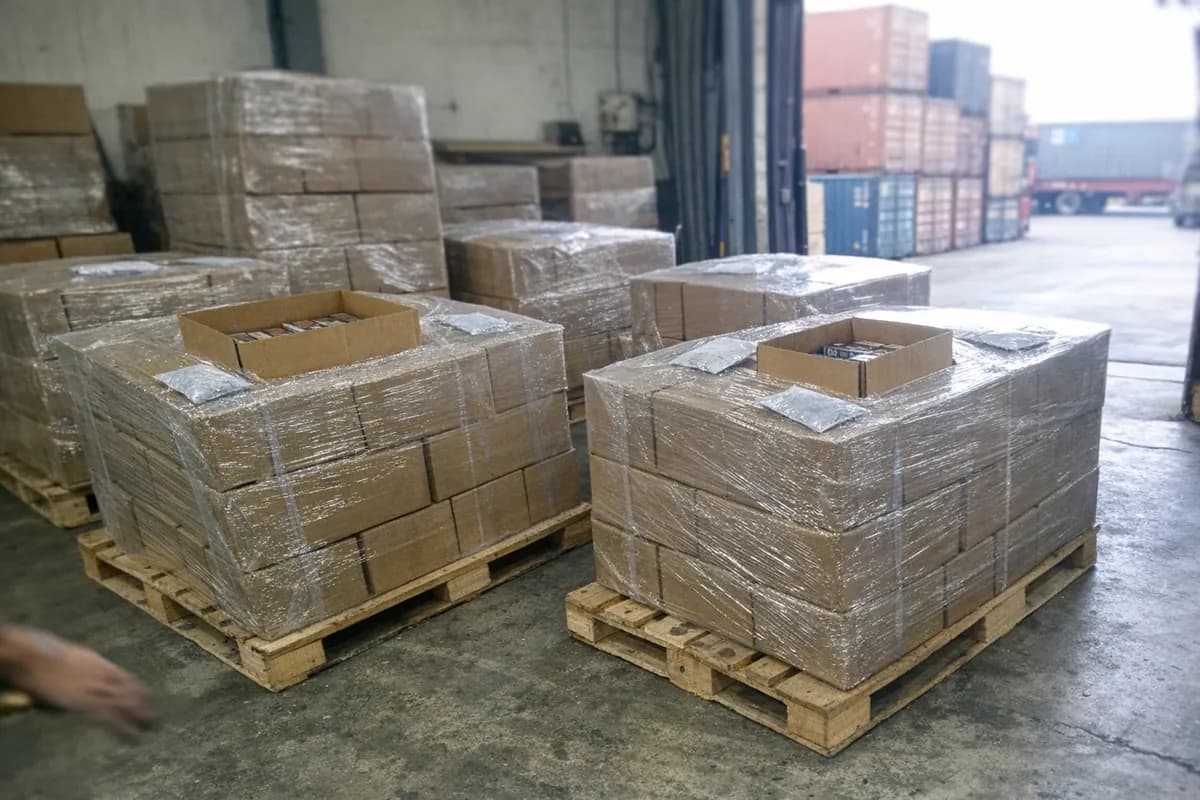
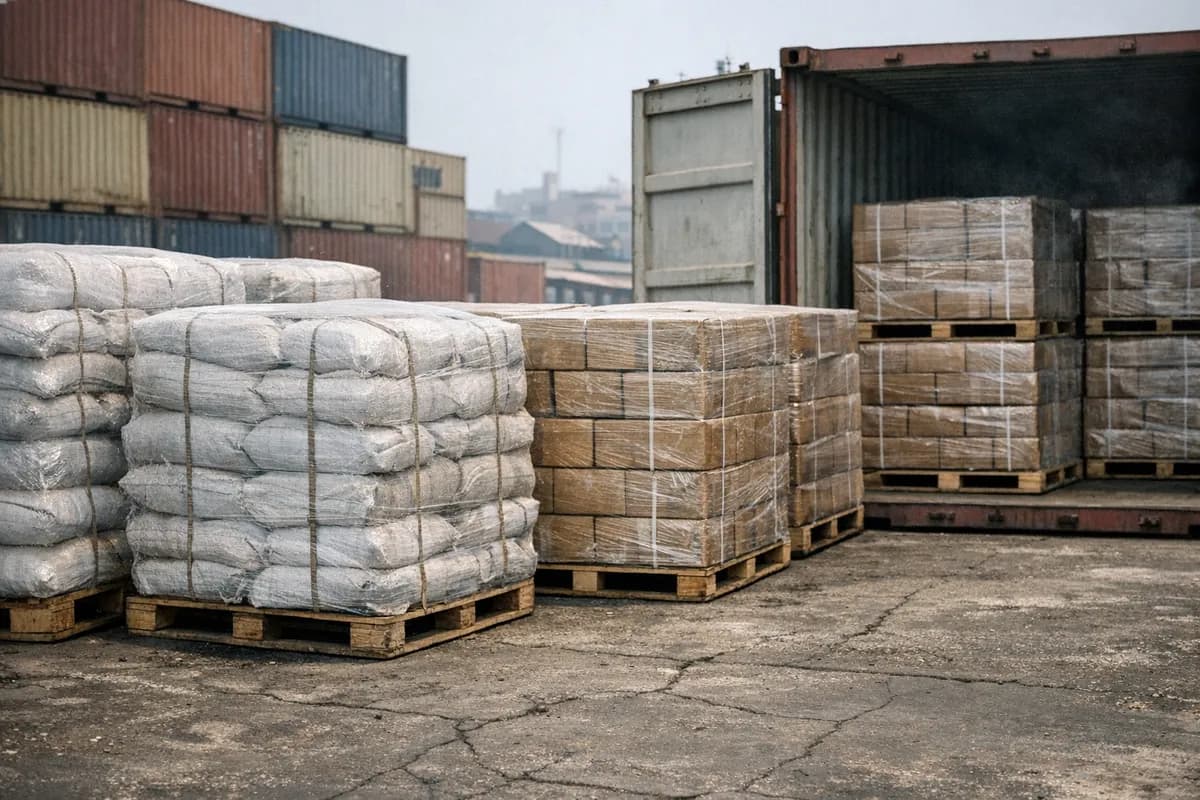
If your warehouse expects palletization, shrink wrap, or desiccant, write those requirements into the PO. On shell lump and fines, moisture control is a necessity rather than an option.
Which Saudi ports do Indonesian charcoal exporters use most?
Dammam and Jeddah are the ports buyers most often name on CIF quotations. On FOB terms, ocean freight from Jakarta or Semarang usually stays with the Saudi buyer's forwarder.
Before comparing supplier offers, confirm the destination port, the Incoterm, and whether freight is prepaid. Until freight is separated out, a lower FOB price tells you nothing against a CIF quote.
For a written Saudi Arabia quotation, send your monthly volume, format mix, and target port through the contact page.
When should Saudi programme buyers book factory audit?
If your distributor or carrier needs FA evidence, book the factory audit ahead of the first OEM container. Programme buyers renewing an existing supply line can reuse a valid audit, provided the production site and the audit scope have not changed.
FA and batch CoA are separate documents. Our factory audit guide explains that distinction and lists the inspection bodies importers most often accept.
For the specification baseline, see coconut shisha cubes, and ask for Saudi-bound samples before approving artwork.
From the catalogue
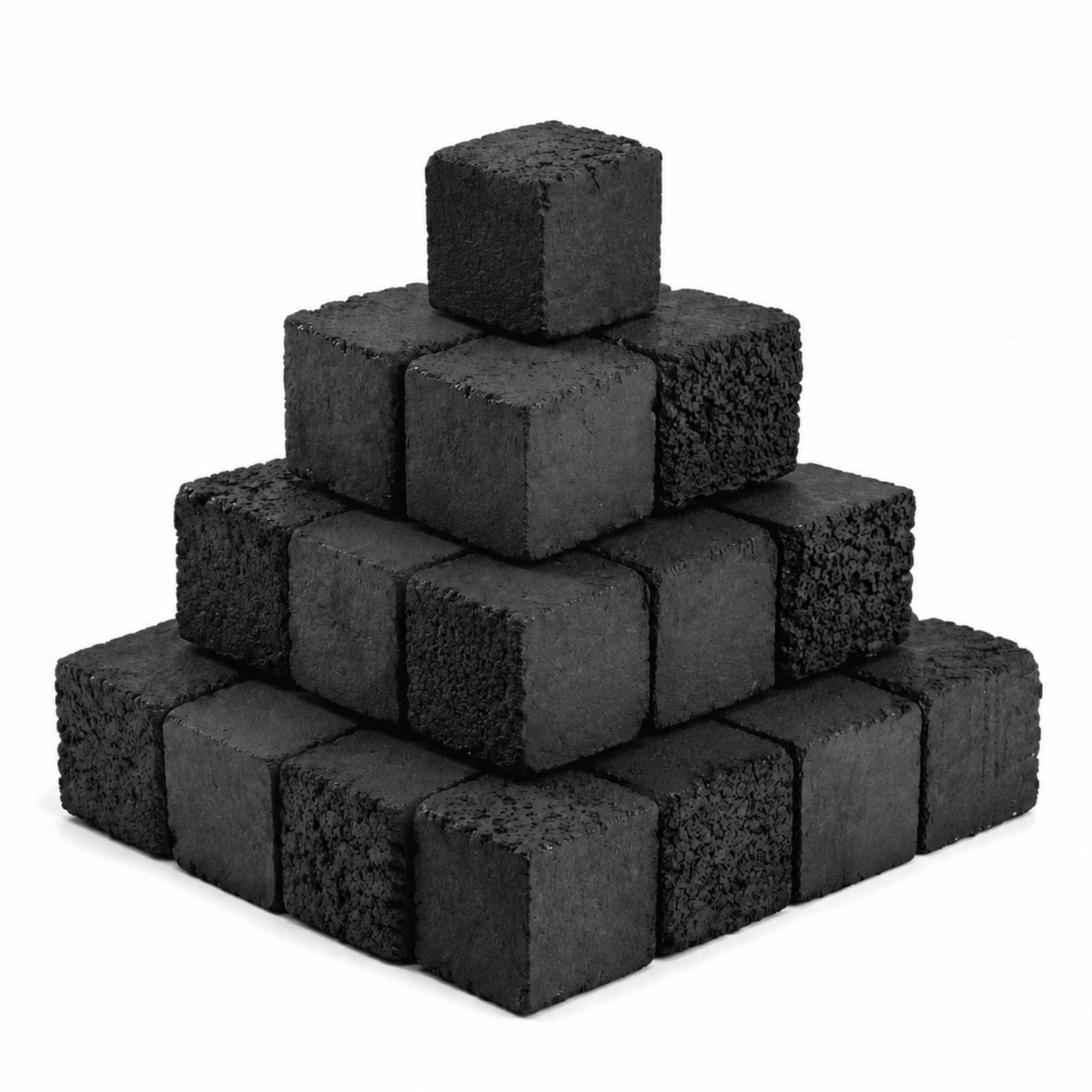
Coconut Shisha Charcoal Cubes
Coconut shell cubes pressed in 22, 25, 26, and 27 mm: 80% fixed carbon, 1.9% white ash, and 80 to 125 minutes per load.
ISO 9001:2015 · MSDS · Self-heating test (IMO) · Factory audit on request
View product