Indonesian Coconut Shisha Cubes Supplier Guide
How to evaluate a coconut shisha cubes supplier in Indonesia: verifying the spec, sample and lab tests, MOQ and price context, private-label boxes, lead time, and the purchase order checklist.
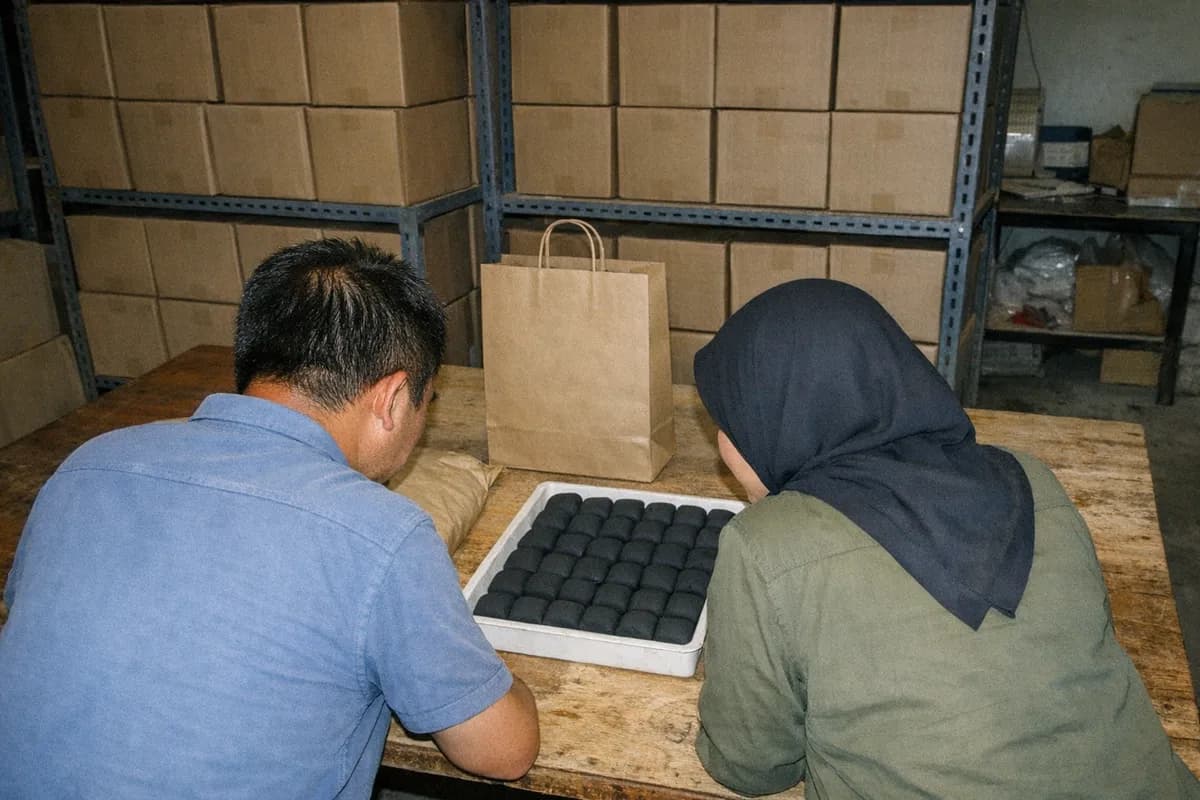
A product photo and a carton mock-up are not enough to buy coconut shisha cubes from Indonesia. The problems hide in the details: ash creeping above spec, mixed cube sizes, flimsy inner boxes, vague Incoterms, or a lab report that does not correspond to the lot that shipped.
We handle these conversations as an export desk. This guide lays out the evaluation sequence we expect a serious buyer to follow before signing a purchase order for Indonesian coconut shisha cubes.
How do I verify the quality of coconut shisha cubes from Indonesia?
Quality is verified by lining up three things before contract: the supplier's written specification, a sample test that is independent or buyer-approved, and the acceptance criteria written into the purchase order. One good burn from one sample means little unless the same criteria are applied again at pre-shipment inspection.
The published specification for our Coconut Shisha Cubes reads: fixed carbon 75% min, ash 2.5% max with white ash, moisture 8% max, volatile matter 15% max, calorific value 7,000 kcal/kg min, burn time 90 minutes plus, size 25 x 25 x 25 mm, packed in a 1 kg inner box and a 10 kg master carton, ISO 9001:2015 certified, Incoterms FOB, CIF, and EXW, HS code 4402.90.
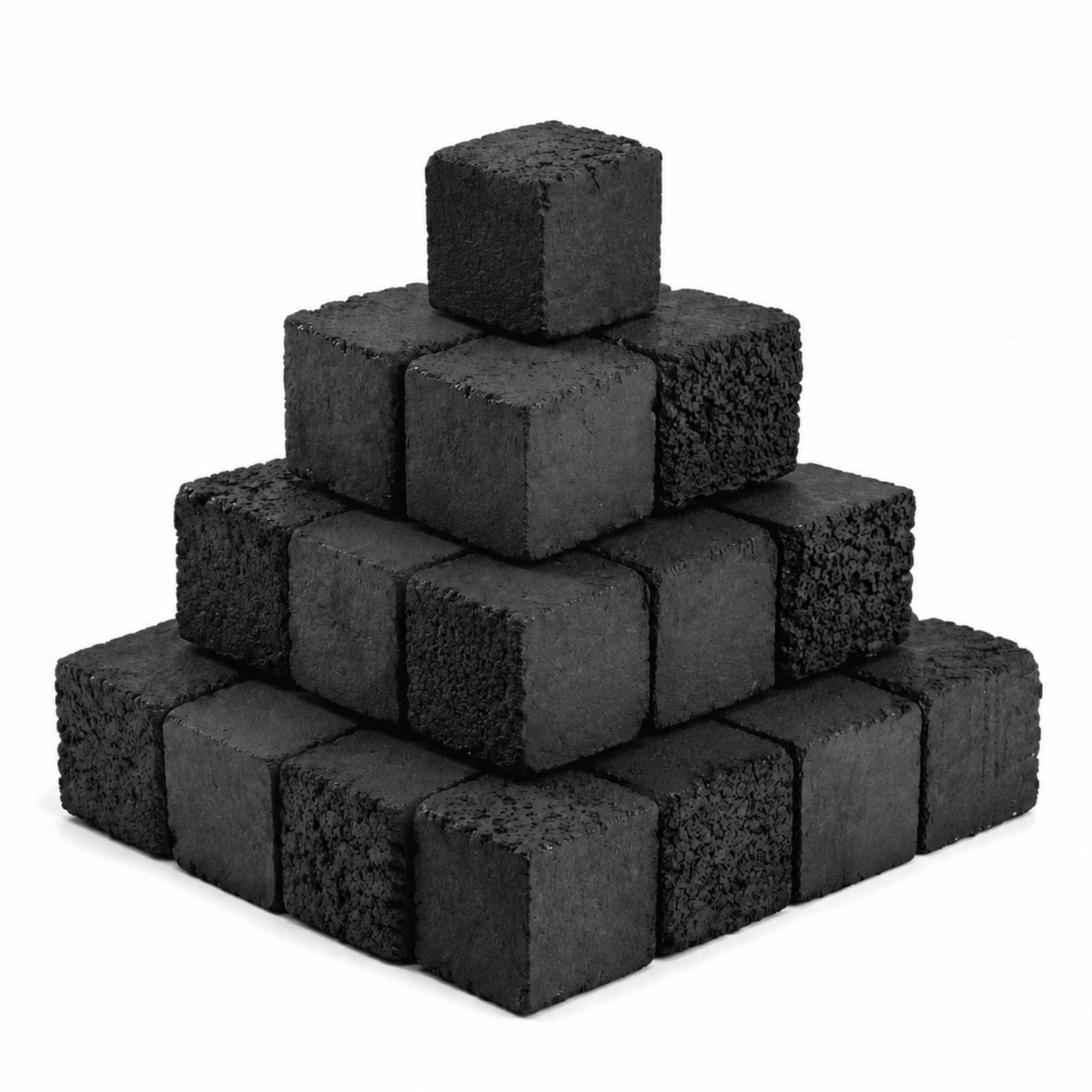
From the catalogue
Coconut Shisha Charcoal Cubes
Coconut shell cubes pressed in 22, 25, 26, and 27 mm: 80% fixed carbon, 1.9% white ash, and 80 to 125 minutes per load.
ISO 9001:2015 · MSDS · Self-heating test (IMO) · Factory audit on request
View productTreat that written specification as the control document. A catalogue label such as “A grade” means nothing unless the purchase order spells out the measurable limits. For shisha charcoal, the buying decision usually turns on ash, heat duration, cube hardness, odour at ignition, and packing presentation. The retail box may also need language, barcode, importer details, and warning text for the buyer's brand.
Our recommended verification runs in stages:
- Request the signed product specification together with a recent lab report for the same grade.
- Obtain samples in the target cube size and, where possible, in the intended retail packing.
- Measure physical size with a caliper across a random sample, not just the best-looking pieces.
- Burn-test in the buyer's usual hookah setup, recording time, ash colour, cracking, smell, and heat consistency.
- Approve a retained counter sample before production, then check pre-shipment goods against it.
ISO 9001:2015, published by the International Organization for Standardization, is a quality management system standard. It supports process control but does not replace product testing. In practice the certificate belongs alongside the lab report, sample approval, packing approval, and shipment inspection record, not in place of them.
To compare cube and hex before committing to a retail line, see our shisha charcoal range, which shows the two main hookah formats we supply.
What tests should I request on samples before approving a supplier?
Ask the lab for moisture, ash, volatile matter, fixed carbon, and calorific value, then run a practical burn test under the conditions your customers actually use. The lab report shows whether the chemistry meets the purchase spec. The burn test shows whether the cube performs in the lounge or on the retail shelf.
For proximate analysis, the laboratory should state its test method on the report. ASTM D1762-84, published by ASTM International, is a standard test method for chemical analysis of wood charcoal covering moisture, volatile matter, ash, and the calculation of fixed carbon. A lab using a different method should still name it clearly, so your technical team can compare results shipment to shipment.
For calorific value, ask whether a bomb calorimeter method was used and whether the figure is gross or net. Two suppliers cannot be compared when one report gives gross calorific value and the other gives a different basis without saying so. The acceptance point should be written in the same basis as the supplier's specification.
A practical sample protocol can be simple, provided it is repeatable:
- Hold samples in a dry room for the same period before testing.
- Weigh the same number of cubes for every trial.
- Use the same burner, lighting time, bowl, and foil or heat management device.
- Record the time from full ignition to the point where heat stops being commercially acceptable.
- Photograph the ash colour after the burn.
- Note odour, visible smoke during ignition, cracking, and cube breakage.
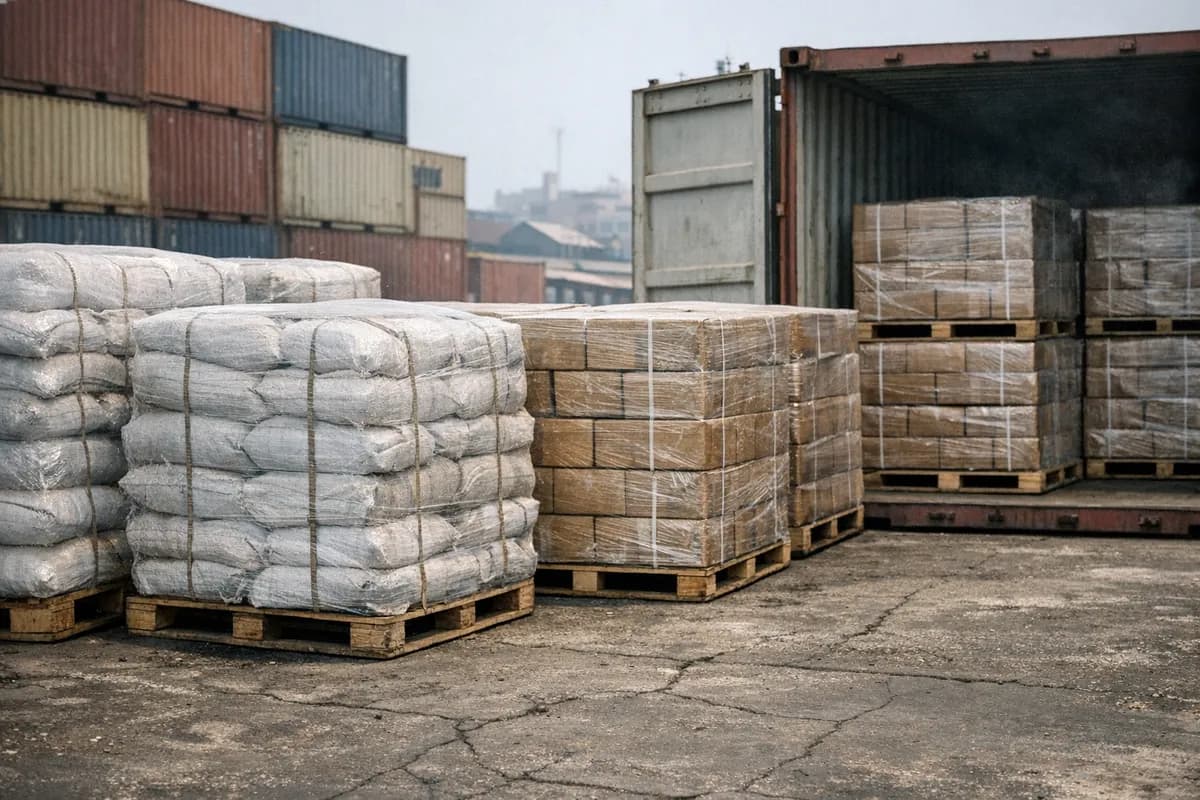
Do not skip the carton and inner box tests on shisha cubes. A good cube still becomes a poor retail product if the 1 kg box crushes, leaks dust, or is held together with weak glue. During production approval, ask for photos of the packed master carton, the batch marking, and the pallet layout. A market that sells through lounges, wholesalers, and e-commerce puts the retail box through far more handling than one warehouse move.
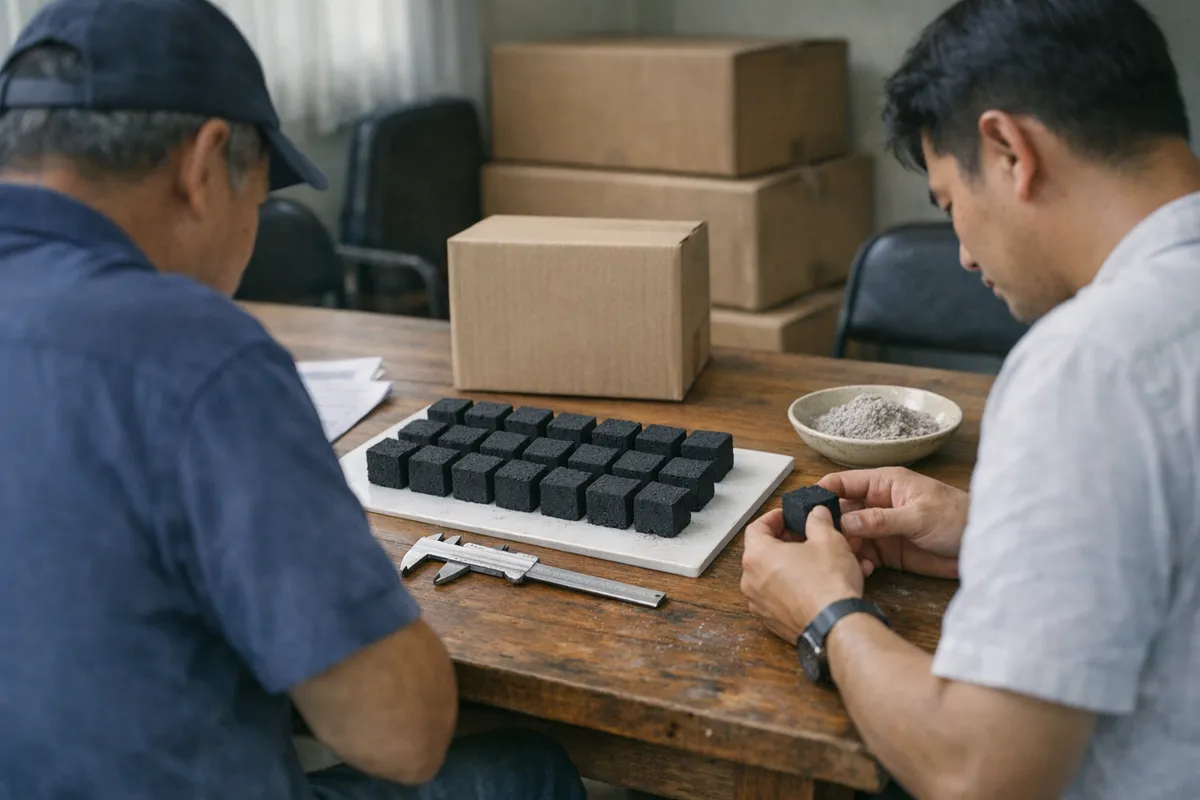
Via our contact page, send your target market, expected monthly volume, and whether you need branded or neutral 1 kg boxes, and we will tell you what we need for a current quotation.
What is a typical MOQ and price context for shisha cubes from Indonesian suppliers?
Our product facts publish no fixed MOQ for coconut shisha cubes, so the MOQ is confirmed in the quotation, never assumed from another supplier's offer. Compare prices only after cube specification, packing format, Incoterm, and shipment volume have been aligned.
The main price drivers on this product are cube grade, retail packing, carton printing requirements, volume per shipment, Incoterm, current ocean freight when CIF is requested, and the production work needed before shipment. A neutral carton and a printed private-label retail box are two different costing exercises. An FOB quotation and a CIF quotation should never be compared without separating freight.
Indonesian coconut shisha cubes have no terminal benchmark that behaves like a daily metal or grain exchange price. Export pricing is built up from origin production cost, packaging cost, inland handling, documentation, margin, and freight where applicable. On CIF terms, the freight component should rest on a current carrier or forwarder quotation for the named destination port, not on a rate copied from an earlier shipment.
Put these details in one message when requesting a quote:
- Destination port and preferred Incoterm.
- Target cube format, which on our cube line is the 25 mm format.
- Inner box requirement, whether neutral or private-label artwork.
- Expected order volume and repeat schedule.
- Required documents and any compliance checks specific to your import.
- Whether samples, pre-shipment inspection, or third-party lab testing should be included.
A lower offer that leaves out retail packing, uses a different ash limit, or quietly shifts freight risk to the buyer is not a better offer. At the supplier-shortlist stage, begin with the cube charcoal product page and then ask us for a written quote built on the same comparison fields your other shortlisted suppliers are using.
Can Indonesian suppliers private-label 1 kg shisha boxes?
Yes, and the private-label discussion should begin with the physical packing format before moving on to artwork, legal text, barcode, and approval steps. Our published cube packing is a 1 kg inner box in a 10 kg master carton, so the 1 kg box is the format to reference when preparing artwork questions.
Decide before contracting who controls each packaging element. Artwork, language, barcode, warning text, importer details, and any market-specific claims normally sit with the brand owner. Production feasibility, the carton packing method, batch marking, and whether the artwork can be printed without slowing the schedule sit with the supplier.
A screen image alone is no basis for approving mass production. For private-label boxes, request a packaging approval file containing the dieline, final artwork, carton marks, master carton label, batch code position, and photos of packed boxes. Where your importer registration requires exact wording, approve that wording before printing.
The usual negotiation points are whether the first run uses printed boxes or stickered neutral boxes, who pays for printing setup, what happens if the artwork changes after approval, and whether surplus printed boxes can be held for repeat orders. These are commercial terms, and they belong in the pro forma invoice or purchase contract, not in chat messages.
The product should never be altered quietly to suit a packaging target. If your retail market wants a different cube size, burn behaviour, or ash tolerance, treat that as a separate product specification with its own sample approval, not as a packaging revision.
How long does production and shipping usually take from Indonesia?
We publish no fixed lead time for coconut shisha cubes, so the honest answer comes from the production slot, the packing approval status, the shipment volume, and the sailing schedule at the time of quotation. For contract control, keep production time and ocean transit separate rather than asking for a single combined figure.
A clean timeline has five checkpoints: sample and specification approval; artwork and packing approval if private-label boxes are used; production and internal quality control; pre-shipment inspection, stuffing, and export documentation; and vessel departure and ocean transit under the agreed Incoterm.
That separation matters because each delay has a different owner. Artwork revision is usually the buyer's delay. Production slot and packing availability are the supplier's. Vessel changes belong to the carrier or the forwarder. Customs documentation depends on an accurate commercial invoice, packing list, HS code, and shipment instructions.
Under FOB, the buyer or the buyer's forwarder controls the vessel booking once goods are ready at the named Indonesian port. Under CIF, the supplier arranges freight to the named destination port, so the freight quote and the shipping line schedule must be current. Under EXW, the buyer takes control earlier and has to plan inland pickup, export handling, and documentation responsibilities with care.
Have the lead time expressed in milestones, not as “ready soon” or “fast shipment.” The purchase order should say when production starts, which approval must precede it, when inspection takes place, and which documents must be issued before payment release or shipment.
What should be on the supplier checklist before signing the purchase order?
The checklist exists to turn an approved sample into a controlled shipment. Before any deposit or production instruction goes out, the purchase order must define the product, the packing, the inspection method, the Incoterm, the payment documents, and the claims process.
Apply this checklist before contracting with any coconut shisha cubes supplier in Indonesia:
- Product name, cube size, and the measurable chemistry limits taken from the specification.
- Lab report requirements, including the test method name and the lot or sample reference.
- Retained sample approval, with photos and the sample date on record.
- Packing format: 1 kg inner box, master carton marking, barcode, and language text where relevant.
- Incoterm, named port or place, and the party controlling freight booking.
- HS code for customs purposes, which is 4402.90 for our charcoal products.
- Export and import documents required, agreed before shipment.
- Pre-shipment inspection scope, covering cube size, observed broken percentage, carton count, and visual packing condition.
- Claim procedure, with the evidence needed for shortage, moisture damage, carton damage, or off-spec lab results.
Good sourcing is not just finding the lowest factory price. With Indonesian coconut shell charcoal, the safer path is to lock the specification, test the sample, approve the packing, and get the shipment terms down in writing. If you are weighing shisha cubes against other coconut-based fuel formats before a formal inquiry, the wider coconut shell charcoal range is the place to look.